Beyond Percentage Off: Designing Discount Mechanics That Match Buyer Behavior
The shape of a discount is a strategic choice. Stores that can configure the mechanic, not just the value, consistently outperform stores that can only change the number.
If you've been following this series, we've now covered conflict management, simulation, live profit guards, market-level scoping, and order-level analytics. That's the profit-control backbone. In this article, we turn from defense to design.
Because once your stack is protected, the question becomes what to run. And the choice is much wider than most merchants treat it to be.
The tyranny of the percentage discount
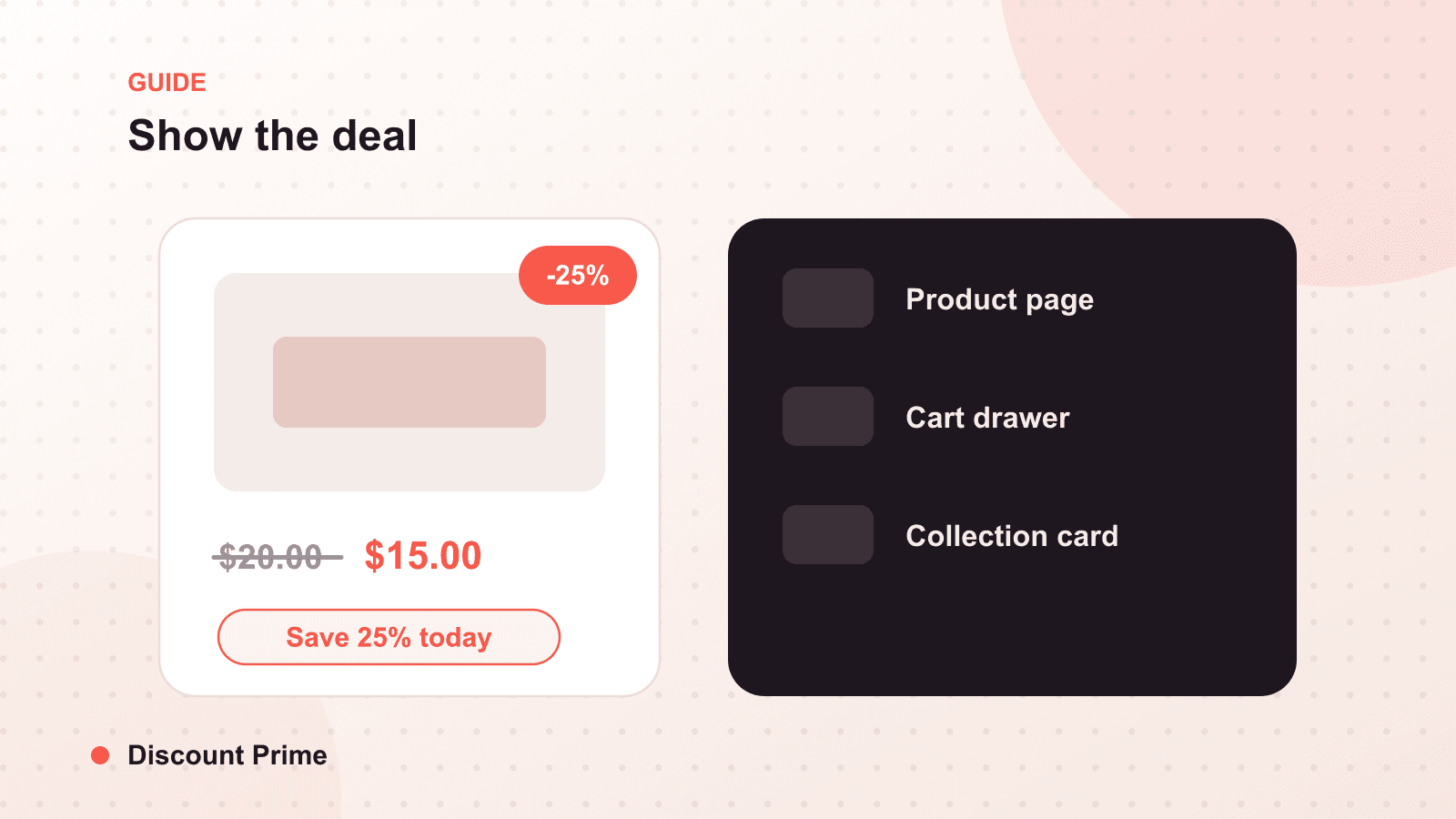
Most discount tooling pushes you toward a small set of defaults. Percentage off. Fixed amount off. Free shipping. Maybe a BOGO with a handful of rigid configurations. The interface rewards simplicity, which is fine for early-stage stores, but it quietly shapes how you think about promotions as a number to tune, rather than as a mechanism to design.
A percentage discount is a blunt instrument. It pulls demand forward. It rewards customers who were going to convert anyway. It produces almost no selection effect on cart composition. And in most categories, once you exceed a threshold, usually around 20%, it starts doing damage to brand perception that no analytics dashboard will tell you about.
The alternative is not 'run fewer discounts.' The alternative is to treat the mechanism itself as the strategic variable.
What 'custom template' actually means
A modern discount engine should give you a library of discount mechanics, each with its own logic, and let you configure that logic precisely. Not 'the system has BOGO' but 'the system lets you define BOGO where buy is scoped to these products, get is scoped to those products, get quantity is conditional on buy quantity, and the get value can be a percentage of the lowest, highest, or specific line.'
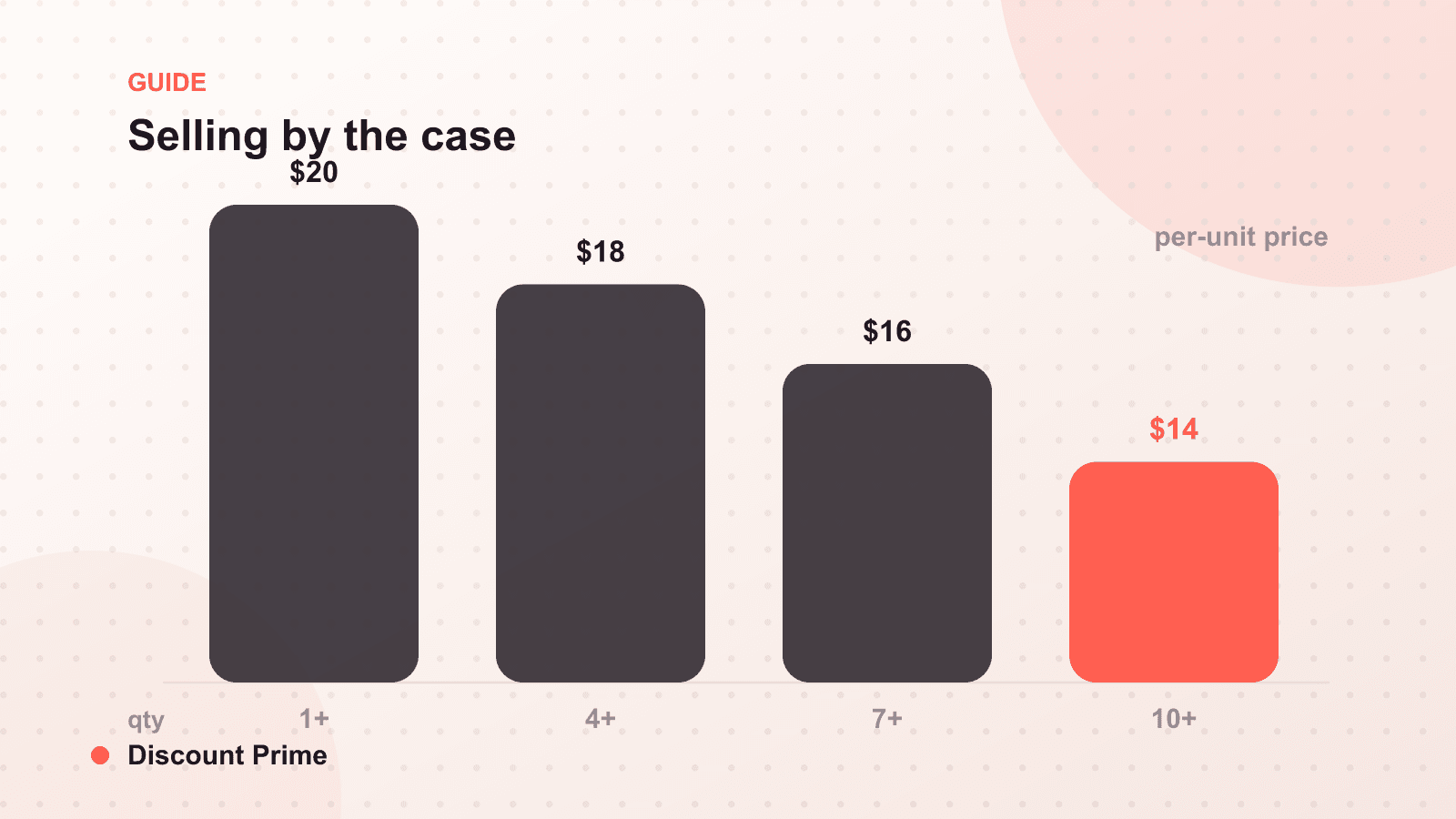
Each mechanic shifts customer behavior differently. A flat 15% off the cart is one thing. A tiered 'spend more, save more' 10% at $75, 15% at $125, 20% at $200 is a fundamentally different animal: it creates visible, crossable thresholds that pull cart size up without paying the 20% cost on every order. A bundle 'any three from this collection for 25% off' is different still: it encourages composition, which favors inventory balance and affinity products. A progressive gift-with-purchase, a gift at $100, an upgraded gift at $150 taps into psychological dynamics that a percentage discount cannot touch.
Custom templates are the surface area through which you express these mechanics. And the depth of that surface area is the difference between running promotions as a recurring chore and running them as an expressive design discipline.
Matching mechanic to moment
Different campaigns have different purposes. The mechanic should serve the purpose.
A new customer welcome promotion is about a single conversion. A simple fixed-amount-off 'save $10 on your first order over $40' tends to outperform a percentage here, because a dollar amount anchors more clearly in the customer's mind at low cart sizes, and it protects your margin on the small orders that define a first purchase.
A volume-driving campaign during a slower period needs a mechanic that rewards larger carts asymmetrically. Tiered discounts excel here. The top tier does the storytelling; the bottom tier does the volume; the middle tier does most of the actual work.
A clearance motion on aging inventory needs a mechanic who is steeped in the target products and invisible on everything else. Category-scoped percentage discounts, or bundle mechanics that force aging inventory to move as part of a composite offer, better serve the merchandising goal than a storewide cut that also discounts your freshest SKUs.
A loyalty reward is not really a discount; it's a recognition mechanism. A member-only mechanic, configured as a tier with its own pricing, is visible only when logged in and communicates something a generic discount code cannot.
None of these is more sophisticated than the others in isolation. They are appropriate to different moments. The operational unlock is that your platform lets you pick the right one without code, without workarounds, and without collapsing every promotion back into 'percentage off.'
The traps to avoid are those that sound clever on the pitch but misfire in execution. A tier whose top threshold almost no customers actually reach becomes aspirational branding rather than a functional mechanic; you are not moving volume; you are decorating the storefront. A bundle whose composition is too narrow will sit unused, because most of your traffic doesn't walk in with three specific items in mind. A member-only price visible to logged-out traffic devalues the membership it was supposed to reward. Each of these is a design error, and each becomes visible the moment you run the mechanic through simulation against real carts, which is, again, why the layers of this series depend on each other rather than standing alone.
Where this plays with the rest of the stack
Custom templates don't replace the earlier pieces in this series - they depend on them.
The richer your mechanic library, the more complex the interactions between campaigns become, which is why conflict management had to be the first article. A tiered cart discount combined with a bundle promotion has a nontrivial resolution order. Without a conflict model, the complexity collapses into chaos. With one, the complexity becomes expressiveness.
The richer your mechanics, the more important simulation becomes, because the intuitions you've built around flat percentages will not transfer. Simulating a tiered mechanic against your history tells you which threshold placement maximizes uplift without over-rewarding carts that would have crossed the threshold anyway.
The richer your mechanics, the more valuable order-level analytics becomes, because a bundle's performance is not captured in the same numbers as a percentage campaign's. The attribution layer needs to know which template shape is applied so that performance reporting is apples-to-apples.
A note on what this is not
Custom templates are not the same as 'discount codes with more fields.' A field-heavy discount UI with thirty toggles and no underlying mechanic model is the worst of both worlds. It looks powerful, and it is actually brittle. What matters is the underlying mechanic: is there a clean conceptual model for tiered, bundled, progressive, conditional, and member-scoped discounts, and can each be configured without writing code or abusing the code field?
The right test is simple. Describe the promotion you want to run in business language. Can you set it up in the tool in the same language? If you are translating from 'spend more, save more at three clean tiers' into 'three stacked percentage discount codes with complicated eligibility filters,' the tool is forcing you into a shape that will break something downstream.
What to look for in your tooling
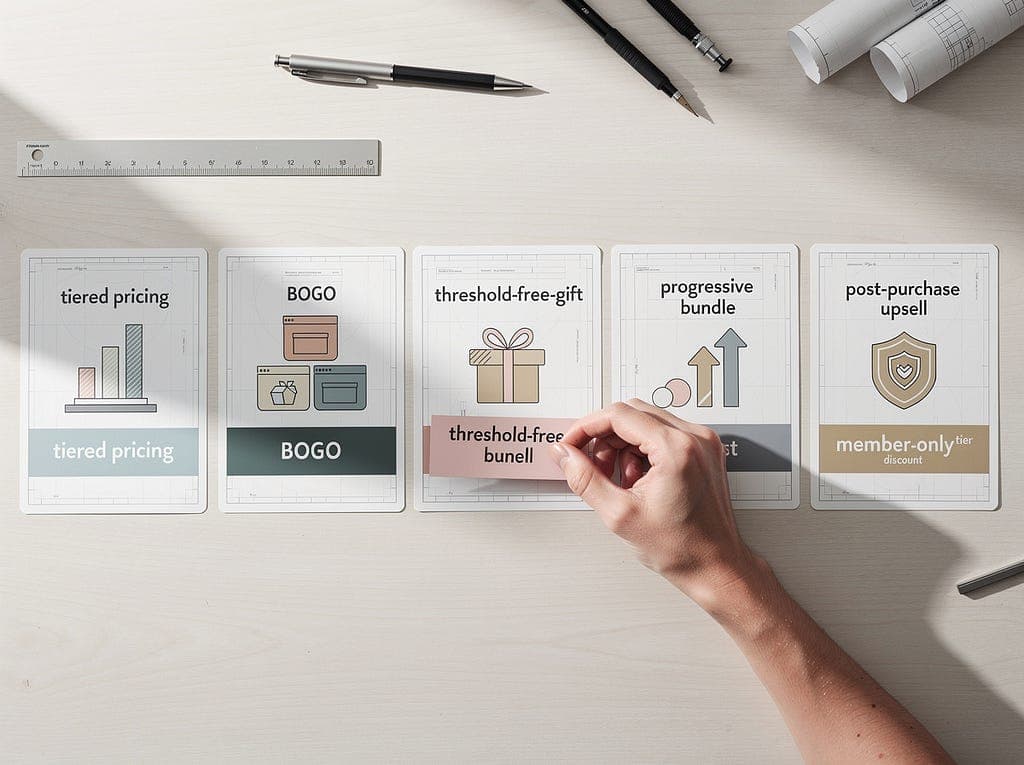
Three questions. Does the platform give you first-class mechanic templates, tiered, bundle, BOGO with composable buy/get logic, progressive gift-with-purchase, member-only pricing, not as workarounds but as explicit campaign types?
Can you configure each of them without code, and have the configuration validate cleanly against your conflict and profit rules? And does the analytics layer report on performance by mechanic type so that you can compare apples-to-apples across your calendar?
Where this leads
Expressive mechanics are powerful. Powerful mechanics create edge cases. Edge cases, at checkout, become abuse vectors for customers who intentionally or unintentionally combine campaigns in ways that defeat your intent. The seventh article in this series looks at discount safety rules: the policy layer that closes off the exploits that would otherwise eat your margin without showing up as a campaign you launched.
Up next in the series → Discount Safety Rules: the guardrails that stop abuse, unintended stacking, and edge-case exploits before they hit your margin.
Part 6 of 9 - The Profit-First Discount Playbook for Shopify Merchants. Each article in the series stands on its own, but is designed to be read in sequence.
Want to put the profit-first playbook into practice?
Discount Prime is where the capabilities of this series conflict management, before/after simulation, Profit Guard, market-level shipping intelligence, order-level attribution, custom mechanics, safety rules, shipping optimization, and Shopify Plus checkout customization come together as one working system. You can install it from the Shopify App Store and start with whichever layer matters most to your business today.
More from the aspedan team → Aspedan blog_
We write about commerce infrastructure, profit-aware tooling, and the ideas behind what we build. If this series resonated with you, the rest of the blog is written in the same spirit for operators who want their promotional calendar to defend margin, not just drive volume._
Related on Discount Prime: Volume discounts · Tiered pricing · Buy X Get Y