If you can simulate a campaign against your real order history before it goes live, your relationship with promotions fundamentally changes.
The first article in this series argued that conflict management is the foundation of profitable discounting. Once you can deterministically declare which promotion wins in any scenario, you can plan campaigns with intent rather than fear.
But having control over what applies is only half of the problem. The other half is knowing, before you go live, whether the campaign you designed will actually do what you want it to do.
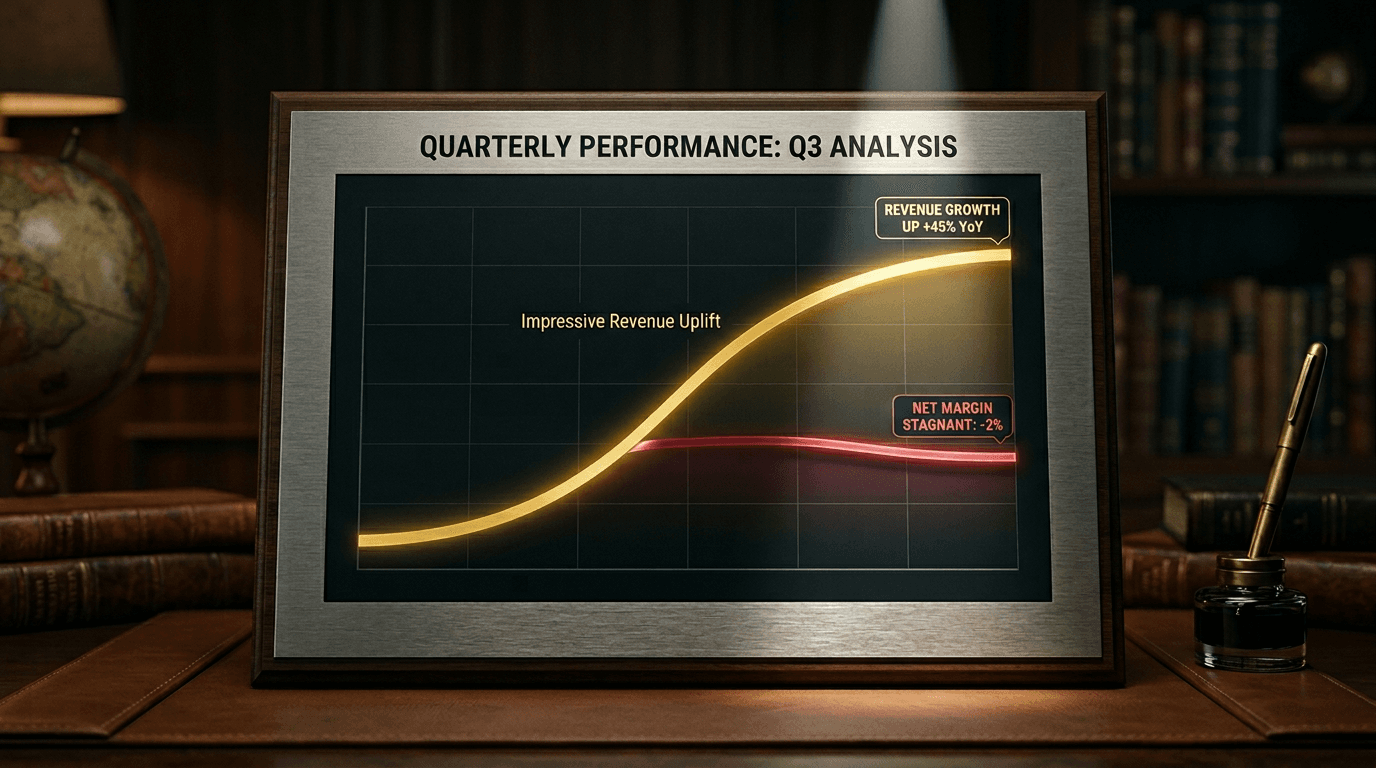
This is where most discount tools go silent. They help you build the promotion. They help you schedule it. They might even help you preview the price on a single product. What they cannot tell you is the one thing that actually matters to the business: if this campaign had been live over the last thirty days, on the orders that actually happened, what would it have done to revenue and to margin?
The hope-based release cycle
Without simulation, every promotion is a bet placed with live money. The bet looks like this: we designed a campaign, we believe it will increase conversion, we believe the uplift in volume will outpace the gross margin hit, and we will find out whether we were right in about two weeks when the data is clean. If we were wrong, we will adjust next time.
This is how most teams operate, and it works in the narrow sense that stores survive it. What it costs you is invisible. It costs you the campaigns you did not run because you were not confident, the ones you ran too timidly because you hedged the depth, and the ones you ran too aggressively because nobody modeled the combinatorics. It costs you the optimal version of your calendar that you never discovered.
What before-and-after execution actually is
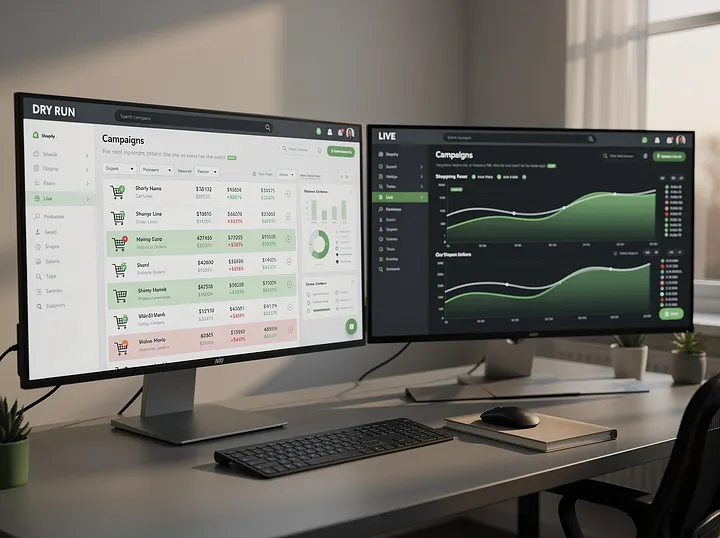
A mature discount engine treats simulation as a first-class operation. You build a campaign or a combination, meaning a specific stacking relationship between two or more campaigns, and the engine runs it against your actual historical orders. Not synthetic data. Not a sample. The real sequence of carts that your customers actually checked out with, over the window you choose.
The output is not a graph. It is a side-by-side ledger. For the same set of orders, here is what each customer paid, the margin, and the total revenue under current conditions and under this proposed campaign. You can slice by product, customer segment, market, or channel. You can see the orders where the campaign helped, the ones where it had no effect, and the ones where it would have tipped the cart into unprofitable territory.
For combinations, where most of the real risk lies, this is transformative. A combination is not a single discount; it is the relationship between two or more discounts. Simulating that relationship against historical data is how you find the edge cases that only arise when two campaigns overlap.
The campaigns you could not have run before
Once the simulation is available, the campaigns you can plan change shape.
A tiered volume discount that you were hesitant to deepen can be tested against last quarter's orders. You see exactly how many carts would have crossed the new threshold, how much incremental AOV you would have captured, and whether the larger cut at the top tier is actually paid for by the volume uplift or whether it cannibalizes margin on orders that were going to hit that basket anyway.
A BOGO campaign that you want to combine with free shipping over a threshold can be simulated as a combination. You see the percentage of BOGO-eligible carts that also cross the shipping threshold, the blended margin on those orders, and whether the incremental conversion on almost-qualifying carts is worth the margin hit on the ones that were already going to ship.
A loyalty tier promotion you want to run on top of a seasonal storewide offer can be modeled either way, with the tier combined or excluded, against your real customer base. You are no longer debating the policy in the abstract. You are looking at two simulated outcomes on the same orders.
What surprises most teams the first time they run a simulation is not the promotions that obviously fail, but the ones that look great in the calendar and break under load. A hero campaign paired with an always-on loyalty tier, both well-designed individually, can sometimes produce a combination whose blended margin is materially worse than either on its own. Intuition does not catch this. The math catches it, but only if the math is run on the orders you actually have, not on a plausible-looking sample.
Why this beats just testing it live
A/B testing a promotion on live traffic has a legitimate role, but it is expensive when the test itself is a loss. If your campaign is net-negative on margin, the A/B test costs you real profit every hour it runs. Simulation is not a replacement for live measurement, customer behavior is the only ground truth, but it is the only honest way to filter out campaigns that never should have launched.
Think of simulation as the profit equivalent of a build step. You would not ship code to production without compiling it. Why would you ship a discount to your live checkout without running it against the orders you know you had?
The profit math, one layer deeper
In the previous article, we looked at how unintentional stacking can turn a nominal 15% campaign into an effective 23.5% discount on overlapping orders. Simulation is how you put numbers on that scenario, specifically for your business.
Run the 15% storewide campaign, combined with your loyalty tier, against last quarter. You will see the real overlap, not the assumed one. You will see the exact number of orders where both would have applied. You will see the blended margin on those orders. And you will be able to make a clean decision: leave them combinable and accept the math; make them exclusive and route loyalty customers to the tier; or introduce a ceiling that caps the combined discount at a floor you define. That last option only exists if your platform lets you express it and lets you simulate it before you ship it.
What to look for in your tooling
When you evaluate a discount platform for simulation, the meaningful questions are narrow. Does the simulation run against real historical orders, or against a sampled or synthetic proxy? Can you simulate interactions among two or more campaigns, not just a single promotion? Does the output include margin, not just revenue and discount? And can you compare scenarios side by side, so the question becomes which campaign to ship, not whether to ship at all?
Most tools that advertise a preview give you a calculator for a single product. A platform built for profit gives you a ledger of what would have happened to your store.
Where this leads
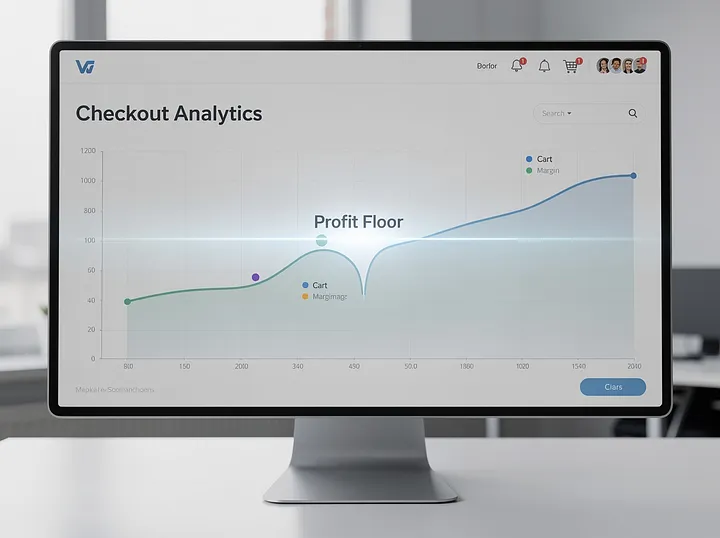
Conflict management decides what applies. Simulation decides whether it should. The third piece of this puzzle is what happens at checkout: the real-time guardrail that prevents any single order, no matter how the promotions align, from shipping below your profit floor. That is Profit Guard, and it is the subject of the next article in this series.
Part 2 of 9 - The Profit-First Discount Playbook for Shopify Merchants. Each article in the series stands on its own, but is designed to be read in sequence.
Want to put the profit-first playbook into practice?
Discount Prime brings simulation, profit analytics, and conflict-safe campaigns together as one Shopify-native system, so you can plan promotions on evidence instead of hope.
Related on Discount Prime: Profit analytics · Volume discounts