The Hidden Cost of Going Global: Why Some Shipping Markets Quietly Eat Your Profit
The geography your promotions serve is part of your P&L. A profit-first platform treats unprofitable destinations as a first-class problem, not a line item.
Across the first three articles in this series, the focus has been on the cart conflict resolution between promotions, simulation of those promotions against history, and a live margin floor at checkout. Each layer operates on the content of a single order.
But profitability on Shopify has a dimension that most discount tools never model: where the order is going.
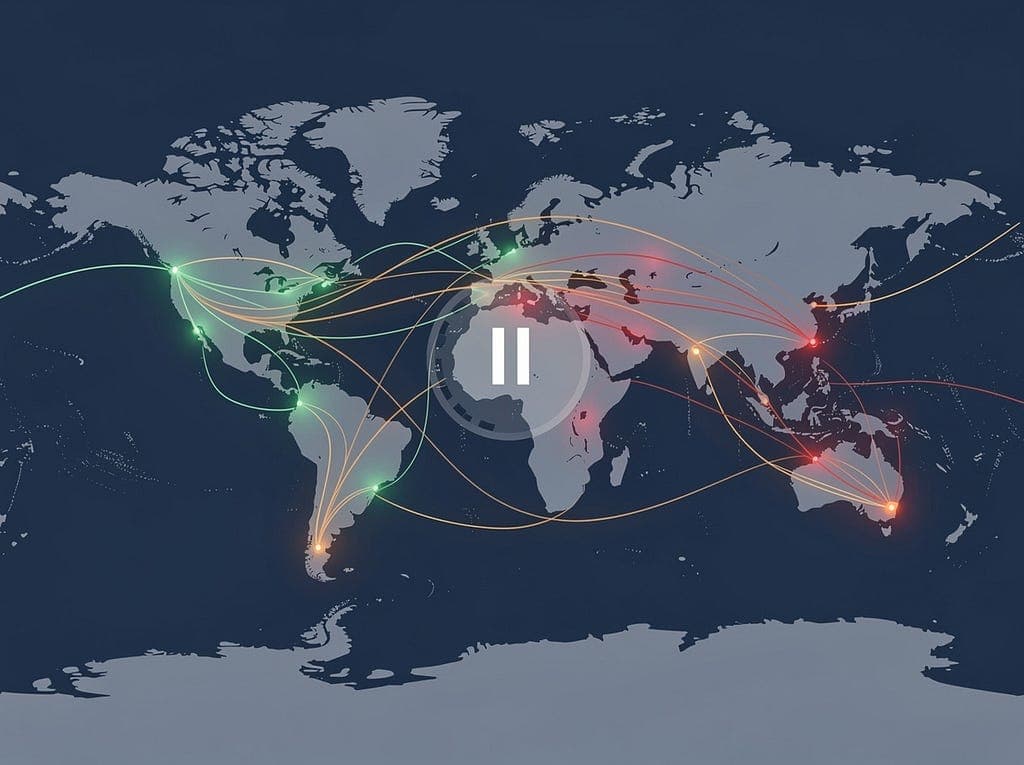
Two identical carts going to two different countries are not in the same order. One of them costs you meaningfully more to fulfill. One of them has a higher return rate, a higher chargeback rate, or a higher duty-adjustment cost. One of them requires a currency conversion that eats another point or two. And when a promotion is running, especially one that includes shipping, those differences decide whether the order is profitable at all.
The assumption nobody questions
Most discount tools assume geography is somebody else's problem. You set up a campaign, you declare it available in 'All regions' or in your Shopify Markets configuration, and the promotion goes wherever you ship. The margin math, if it's done at all, is done at the aggregate level, in a spreadsheet, after the fact.
This works when your cost structure is roughly uniform. It stops working the moment your shipping economics diverge meaningfully between markets. And for most stores serving more than two or three countries, they always do.
Free shipping above a $75 threshold might be wildly profitable in your home country, marginal in two adjacent markets, and loss-making in three farther ones. A 20% storewide discount might absorb just fine into domestic margin, clip the international margin to zero, and turn specific remote markets into negative-margin territory once you factor in landed cost. None of this shows up in the campaign; the campaign is one thing, applied uniformly. It shows up only in the blended result, weeks later, after you've absorbed the losses.
What market-level profit control looks like
A platform that treats market selection as a first-class concept does three things differently.
First, it lets you scope every campaign to a specific set of markets, not as an afterthought or an advanced setting, but as a normal property of the promotion. A BOGO campaign is available in these markets. A free-shipping-above-threshold campaign is available in those markets. A 20% seasonal promotion is available globally except in these three markets, where fulfillment economics don't support it. The policy is explicit. The scoping is visible.
Second, it can automatically exclude markets where the promotion would be unprofitable based on cost inputs, shipping zones, and your declared margin floor. This is the 'automatic' part. Rather than manually auditing 40 markets every time you launch a campaign, you declare a rule. This promotion must maintain X margin per order, evaluate every shipping market against that rule, and suppress the promotion in markets where it cannot clear the floor.
Third, it keeps the customer experience coherent in markets where the promotion is excluded. Customers there still see standard pricing, still check out successfully, still transact, but they don't receive a promotion that wouldn't have made sense on their order: no broken codes, no surprise at checkout, no support churn.
The promotions this change
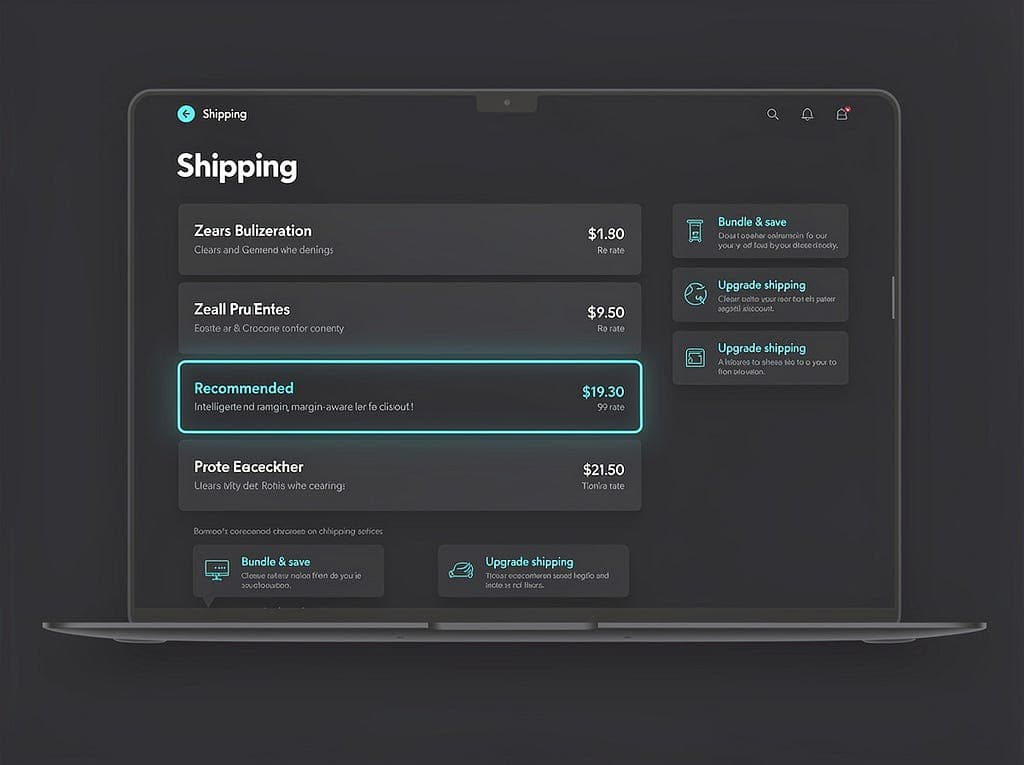
Free shipping is the most obvious. Free shipping, as a marketing lever, is powerful. Free shipping, as a global policy applied uniformly, is a slow margin drain in half the markets you offer it. A market-aware discount engine lets you run the free-shipping promotion aggressively in markets where shipping economics absorb it, and silently withhold it in markets where it would make orders unprofitable. You get the uplift where it pays off. You don't pay for it where it doesn't.
Storewide discounts behave similarly. A 25% campaign looks clean on paper. Against your home-market cost structure, it holds margin. In a remote market where fulfillment adds another 8 to 12 percentage points to landed cost, the same 25% turns unit economics red. An intelligent discount layer lets you keep the campaign live in the markets where it's sustainable and either reduce its depth or exclude it in the markets where it isn't.
Threshold-based combinations, such as 'gift above $100' and 'upgrade shipping above $150', depend even more heavily on market economics because the thresholds themselves have different meanings across markets. A $100 cart in your home market is a common size; in a smaller market, it may be rare, and the customers who reach it are atypical. Market-aware scoping is how you ensure the promotion runs where it actually changes customer behavior at a sustainable cost.
There's a softer benefit that matters for long-term growth: the markets you quietly withhold a promotion from are not markets you abandon. They still check out. They still see your catalog. Over time, if their fulfillment economics improve, a regional 3PL, a bulk-shipping partner, or a lane optimization, you can flip the promotion on without a re-launch, a marketing announcement, or any signal to the customer that anything has changed. The exclusion was silent on the way in; the inclusion is silent on the way back. That's the right posture for a sustainable international program.
Why most tools don't do this
Market exclusion based on profitability requires two things most discount apps lack: native integration with Shopify Markets at the campaign-rule level, and cost data structured by market. Without the first, you're limited to the coarse allow-lists Shopify exposes. Without the second, you can't express 'unprofitable' in terms that the tool can reason about; all you have is 'available' or 'not available,' with no intelligence about why.
This is the intersection of the conflict management and profit guard ideas from earlier in the series, extended one dimension further. Conflict management declares relationships between promotions. Profit Guard declares a floor at the cart. Market selection declares scope at the geography layer. Together, they form a three-dimensional control surface: what promotions interact, what margin a cart can land at, and what markets the campaign is allowed to reach.
What to look for in your tooling
Three questions cut through the noise. Can every campaign be scoped to a specific subset of Shopify Markets, as a first-class property? Can that scoping be automated, meaning the platform itself can exclude markets where the campaign would not clear your margin floor, based on cost inputs? And does the exclusion behavior preserve a clean customer experience in excluded markets - no broken checkouts, no confusing error states?
If any of those answers are 'work around it manually' or 'upgrade to our enterprise tier,' you are running aggregated promotions in a disaggregated cost world.
Where this leads
With conflict control at the promotion layer, simulation at the planning layer, a profit floor at the cart layer, and market scoping at the geography layer, you have a working profit-protected discount system. The next question becomes measurement. Which of these promotions actually moved the margin? Which customer cohorts responded? What dollar of discount produced what dollar of gross profit? That is what the fifth piece in this series addresses: dynamic analytics, order-level discount breakdown, and attribution.
Up next in the series → Dynamic Analytics: how order-level discount breakdown turns promotional performance from anecdote into a measurable, attributable line item.
Part 4 of 9 - The Profit-First Discount Playbook for Shopify Merchants. Each article in the series stands on its own, but is designed to be read in sequence.
Want to put the profit-first playbook into practice?
Discount Prime is where the capabilities of this series conflict management, before/after simulation, Profit Guard, market-level shipping intelligence, order-level attribution, custom mechanics, safety rules, shipping optimization, and Shopify Plus checkout customization come together as one working system. You can install it from the Shopify App Store and start with whichever layer matters most to your business today.
More from the aspedan team → Aspedan blog_
We write about commerce infrastructure, profit-aware tooling, and the ideas behind what we build. If this series resonated with you, the rest of the blog is written in the same spirit for operators who want their promotional calendar to defend margin, not just drive volume._
Related on Discount Prime: Free shipping · Profit analytics