A case pack fails not when the price is wrong, but when the shopper cannot tell, in one glance, what they are paying per unit.
Selling by the case, the multipack, or the bundle is one of the most reliable ways to lift average order value, and one of the easiest to get quietly wrong. The mechanics are simple: offer more units at a better per-unit price. The failures are all about clarity and margin. If the shopper has to do arithmetic to understand the deal, they skip it. If you set the bundle price on the headline number without checking the cost of everything inside it, you erode profit. This guide covers how to structure case and bundle pricing so neither happens.
The short version: show the per-unit price next to every pack size, align packs to how you actually ship, and verify margin at your deepest tier. Get those three right and case pricing does exactly what you want.
Case packs vs bundles: not the same thing
These get used interchangeably and they should not be, because they solve different problems.
A case pack is a quantity of the same product sold together: a 12-pack of the same candle, a case of 24 identical cans. It rewards a shopper for buying more of one item, and it is really a quantity break with a fixed pack size. If you want the fuller treatment of quantity-based pricing, we compared the approaches in quantity breaks vs volume discounts.
A bundle is a set of different products sold as one offer: a starter kit, a "complete the look" set, a curated box. It lifts order value by pairing complementary items at a combined price, and its margin math is different because you are stacking the cost of several distinct SKUs.
The pricing principles overlap, but the failure modes differ. Case packs fail on display clarity. Bundles fail on margin. We will take each.
Make the per-unit price impossible to miss
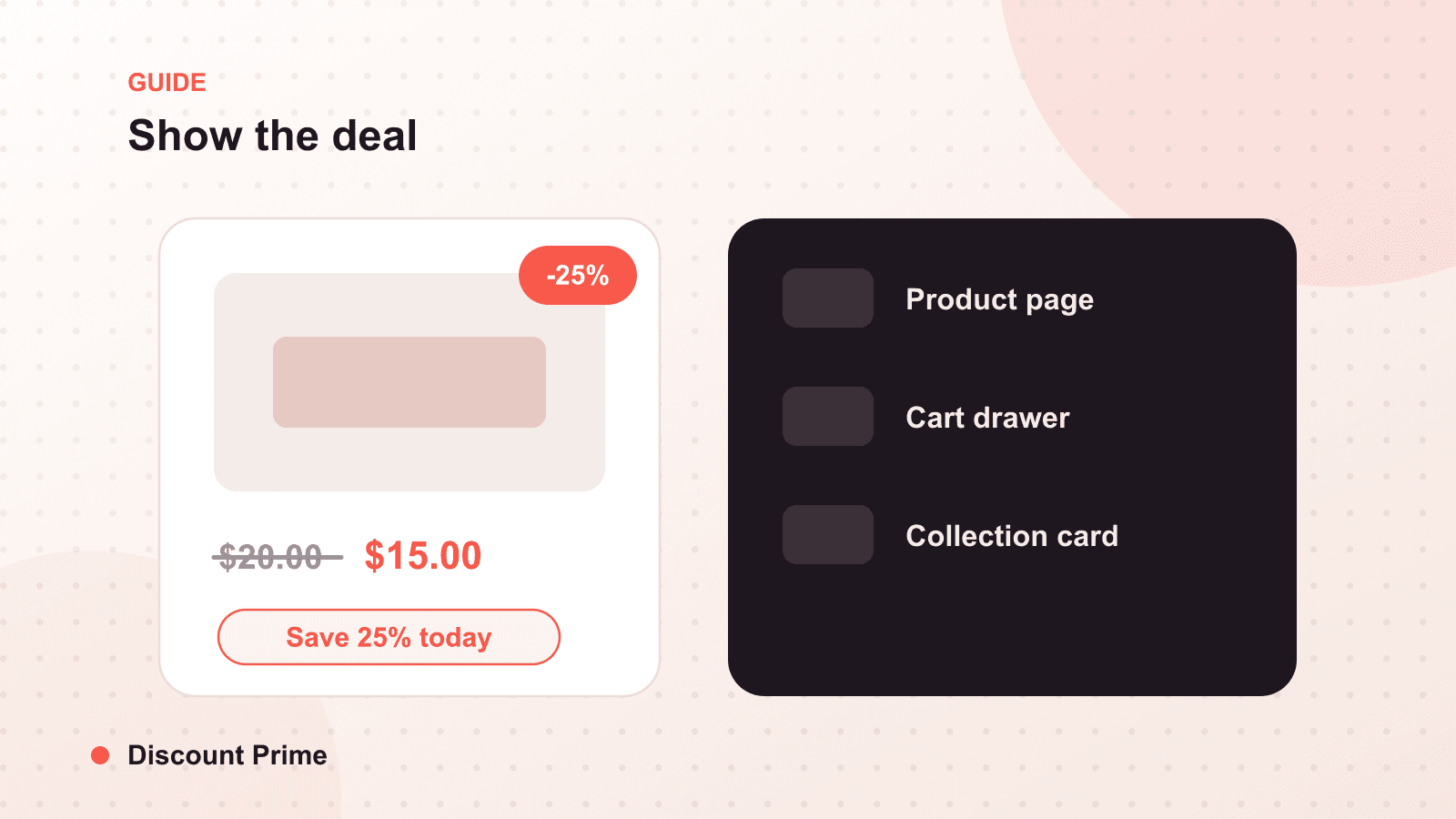
The single most important element of case pricing is the effective per-unit price, shown right next to the pack price. Buyers of consumables and supplies think in cost per unit, not in percentage off. "That is $2.50 each instead of $3.20" lands harder than "save 22 percent," because it matches the number the customer is already using to judge value.
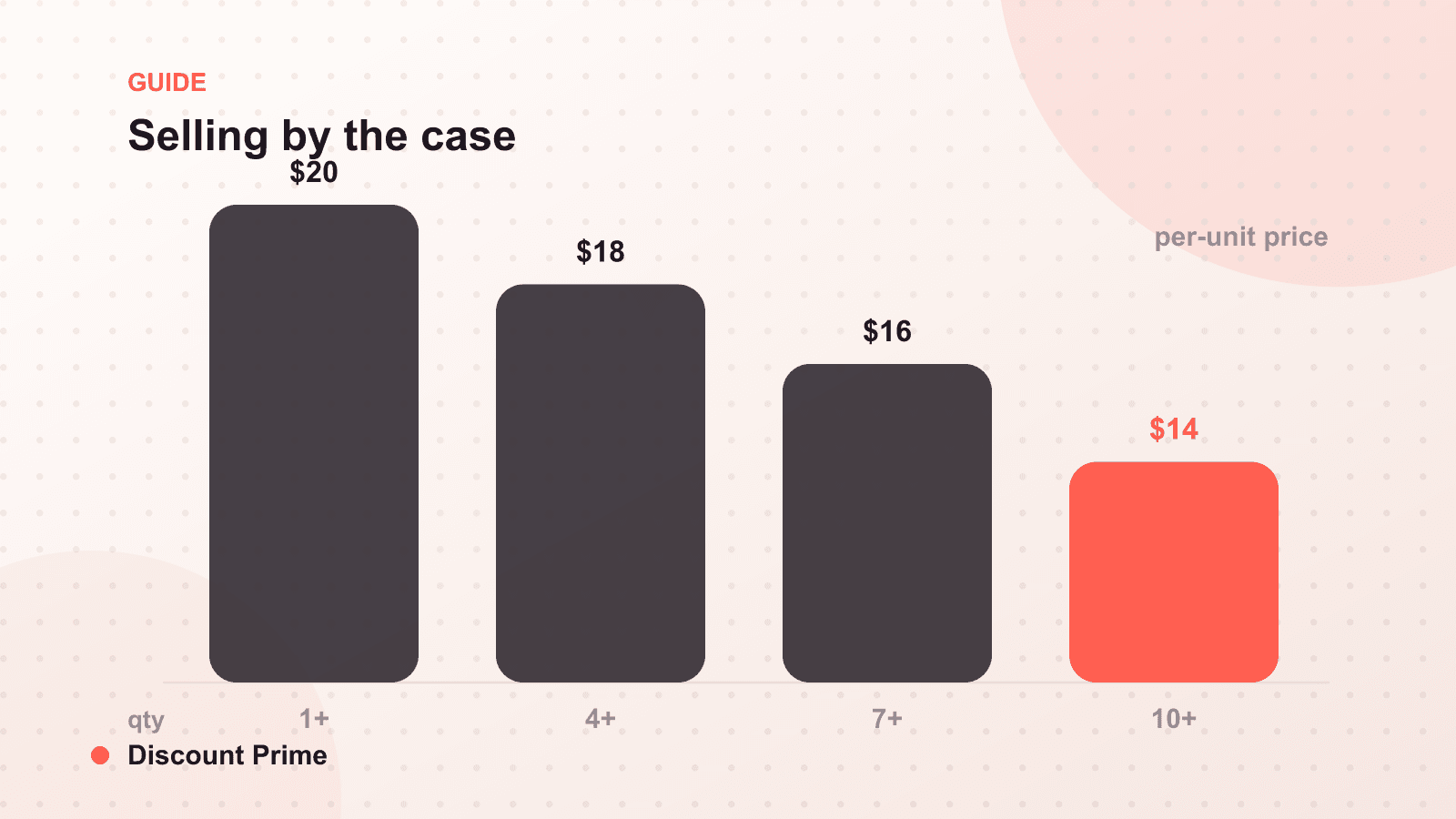
When you sell the same product in several sizes, per-unit display becomes non-negotiable. Put the sizes side by side with the per-unit math done for the shopper:
| Pack size | Pack price | Per unit | What it signals |
|---|---|---|---|
| Single | $3.20 | $3.20 | Try it |
| 6-pack | $17.40 | $2.90 | The everyday choice |
| Case of 12 | $30.00 | $2.50 | Best value, stock up |
A shopper reads that table in two seconds and understands the entire offer. No calculator, no friction. Notice the middle option is designed to be the obvious everyday pick, with the case there to make it look reasonable and to catch the stock-up buyer. That is the same three-tier logic that works for volume discounts, applied to fixed pack sizes.
Align packs to how you actually ship
A case pack that does not match your fulfillment reality creates work at both ends. If you physically pack 12 to a carton, your case should be 12, not 10 and not 15. When the pack size matches the carton, picking is clean, inventory is honest, and the buyer orders in a unit you actually stock.
This matters even more for B2B and bulk buyers, who order in cases and pallets and expect the pricing to speak their language. We went deep on this for wholesale in bulk discounts for B2B buyers: align the breaks to real case and pallet quantities so the buyer never has to convert your tiers into their carton math. The same discipline applies to consumer multipacks, just at smaller numbers.
Protect the margin inside the bundle
Bundles are where margin quietly leaks, because the discount is usually set on the headline price while the cost lives in the components underneath. Here is a worked example.
Say you build a starter kit from three items:
- Item A: retails $20, costs you $8
- Item B: retails $15, costs you $6
- Item C: retails $10, costs you $5
Sold separately that is $45 retail on $19 of cost, a healthy $26 of gross margin. Now you bundle all three for $36, a tidy 20 percent off the combined retail. The headline looks fine. But run the real math: $36 revenue minus $19 cost is $17 of margin, and your margin rate just fell from 58 percent to 47 percent. If Item C was already thin, a "20 percent" bundle can quietly turn your best-value offer into your worst-margin order.
The fix is to price the bundle from the combined cost up, not the combined retail down. Decide the margin you need on the bundle, then set the price to hit it, and confirm your deepest case tier still clears your floor. This is exactly why cost data belongs under every discount decision, and why our profit analytics reports margin at the order level, so a bundle that looks generous on the surface cannot go underwater without you seeing it.
Targeting bundles and cases precisely
Once your data is structured, you can aim these offers by attribute rather than by hand-built lists. With metafield-based targeting, you can run a case-pack promotion across every product carrying a given line or season value, or exclude thin-margin items by their margin band, without assembling a collection for each campaign. Attribute targeting keeps the offer pointed at exactly the right SKUs and keeps the thin ones out of a deal that would sink them.
The clarity checklist
Before you publish a case or bundle offer, confirm:
- The per-unit price is shown next to every pack size.
- The pack quantity matches how you physically ship.
- The option count is small, usually three, so the choice is easy.
- Margin is verified at the deepest tier using fully loaded component cost.
- A floor is set so no order slips below your threshold.
Miss the first three and you lose the sale to confusion. Miss the last two and you win the sale but lose the profit.
Setting this up with Discount Prime
Case packs, multipacks, and bundles all run on the same foundation: clear per-unit display and honest margin math. Discount Prime handles the bulk discounts and quantity breaks natively through Shopify Functions, shows per-unit pricing on the product page without duplicate variants, and reports margin so your bundles cannot quietly go underwater. You can find the app on the Shopify App Store and have your first case-pack offer live in a few minutes.