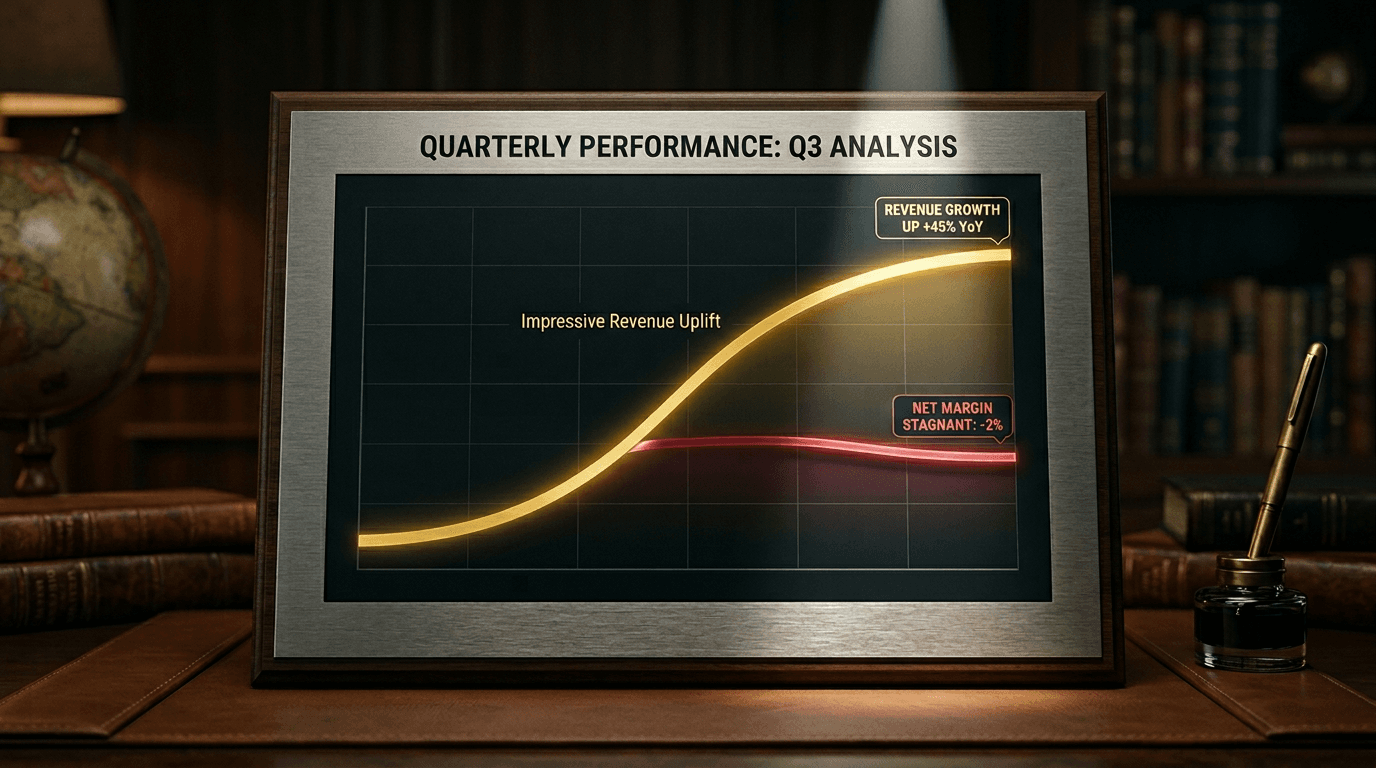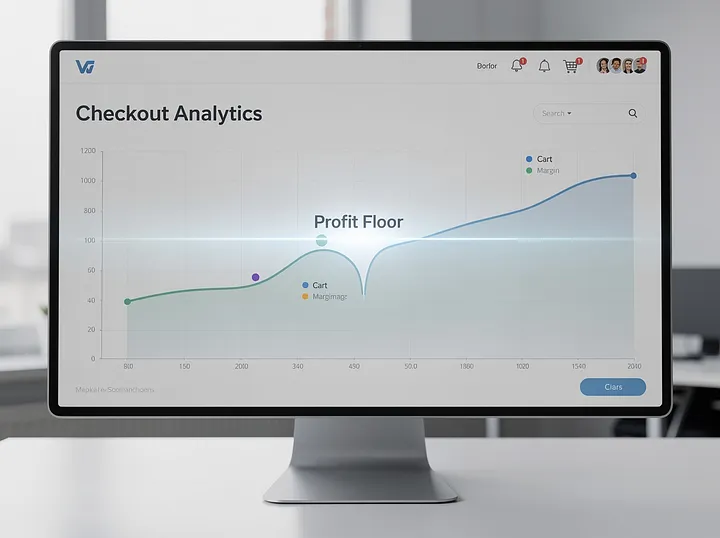

Most Shopify stores lose profit not to the promotions they run, but to the ones that quietly run on top of each other.
You can tell which Shopify stores are maturing by how they talk about discounts. Early-stage operators talk about the biggest offer they can run. Maturing operators talk about what happens when two offers touch.
Because the truth nobody advertises is this: most margin leaks do not come from the promotions you launch. They come from the combinations you never designed: the 15% welcome code that silently stacks on top of the volume discount, the free-shipping threshold that triggers during a BOGO window, the VIP tier that quietly pulls a second cut on top of a seasonal campaign. None of these feels dramatic when they happen. Each one looks like a normal order. They add up.
This is the first article in a nine-part series, The Profit-First Discount Playbook for Shopify Merchants. The series walks through the capabilities a modern discount engine needs to protect profit at scale: conflict management, dry-run simulation, live margin protection, market-level shipping intelligence, analytics attribution, custom mechanics, safety rules, shipping optimization, and checkout customization on Shopify Plus.
We are starting with conflict management because everything else depends on it.
The quiet failure mode of most discount apps
Shopify's native discount system, and most of the apps built on top of it, treat discounts as independent objects. You create a promotion. It runs. Another team, another week, another campaign, someone creates a second promotion. That one also runs. Whether or not they are meant to coexist is not a question the system asks.
In the best case, this works out. In the typical case, one of three things happens. Either both discounts apply where they should have been mutually exclusive, and you quietly ship orders below your intended floor. Or one discount blocks the other in a way customers do not understand, and support tickets pile up. Or your team writes a rat's nest of promo codes and eligibility checks, trying to simulate conflict rules by hand, and misses edge cases at checkout.
The reason this keeps happening is that, in most tooling, conflict management is implicit. It is something the merchant is expected to model in their own head. It is not modeled by the platform.
What conflict management actually means
A conflict management layer does three things your discount stack cannot do on its own.
First, it gives every promotion an explicit relationship to every other promotion. Not a default relationship. This campaign combines with that one. This one excludes those two. This one is a fallback only if nothing higher-priority applies. Conflict is not a side-effect of how discounts are written; it is a first-class property of the campaign itself.
Second, it enforces a deterministic resolution order. When two eligible discounts would otherwise apply to the same line, the system does not silently pick one. It applies your rule. You know which one wins, which one defers, and which one is suppressed before the order is placed.
Third, it makes the conflict visible. A merchant running conflict-aware tooling can look at a product, a cart state, or a customer segment and see exactly which promotions are currently competing for that scenario and which one will be awarded. This is the part most tools do not offer.
How conflict control changes the campaigns you can actually run
Once conflict is controllable, the shape of your calendar changes. You stop running promotions serially out of fear, and you start running them in parallel with intent.
A volume discount on a hero SKU can run alongside a seasonal storewide campaign because you have declared that the volume discount takes priority on its specific products, and the seasonal campaign covers everything else. A VIP customer tier can coexist with a new-customer welcome promotion because you have declared them mutually exclusive. New customers get the welcome offer, VIP customers get the tier benefit, and no one is accidentally getting both. A BOGO campaign can sit on top of a free-gift-with-purchase promotion because you have defined which one occupies the cart position and which one layers on.
The merchants who get this right are not discounting less. They are discounting more deliberately, and keeping the margin they thought they were keeping.
The margin math people do not want to do
Consider a storewide 15% campaign running during a month when you also have a recurring loyalty tier that gives 10% off to repeat buyers. If these two stack on 20% of your orders, a realistic overlap for any brand with a meaningful repeat rate, your effective discount on those orders is not 15%. It is not 10%. It is 23.5% (1 minus 0.85 times 0.90). On a product with a 40% gross margin, that one percentage point of unintentional stack is the difference between a profitable order and a loss-leader. Across a month, that difference compounds into real money, and it never shows up in the promotion's reported performance because the second discount is not the campaign, it is the tier running in the background.
Conflict control is how you stop these compounded discounts from hiding in plain sight. You decide, up front, that new-visitor welcome offers do not combine with loyalty tiers. The system enforces it. You see it in the checkout simulation. You see it on the order. You see it in reporting. Nothing is accidental.
Once conflict is explicit, handoffs become cleaner. A new member of the merchandising team can review the promotional calendar and understand how each campaign is allowed to behave relative to every other campaign, without reverse-engineering anything. That clarity compounds, turning discount management from a senior-operator dependency into a process that survives turnover.
What to look for in your tooling
If you are evaluating a discount layer today, three questions cut through the marketing copy. Can every promotion explicitly declare its combinability at the campaign level, rather than duct-taping codes together? Is there a priority model that resolves every conflict deterministically, so two eligible promotions never produce two different outcomes on two similar carts? And can you preview, for a given product, customer, or cart, which promotions are currently competing and which will win?
Most tools will answer yes to one of those. A platform built around profit will answer yes to all three. This is the baseline. Everything else in the series, simulation, profit floors, market control, and analytics, is built on top of it.
Where this leads
Once you have conflict under control, the next problem becomes knowing, before you go live, whether the campaign you just designed will actually do what you want. That is the subject of the second article in this series: before-and-after execution, running your campaigns and combinations against your actual historical orders so you see the profit impact before customers ever see the promotion.
Conflict management tells you which promotion applies. Simulation tells you whether you should have launched it at all.
Part 1 of 9 - The Profit-First Discount Playbook for Shopify Merchants. Each article in the series stands on its own, but is designed to be read in sequence.
Want to put the profit-first playbook into practice?
Discount Prime brings real-time conflict detection, profit analytics, and margin-based discounting together as one Shopify-native system, so the ideas in this series run on your store instead of living in a spreadsheet.
Related on Discount Prime: Profit analytics · Best Shopify discount apps