The short answer
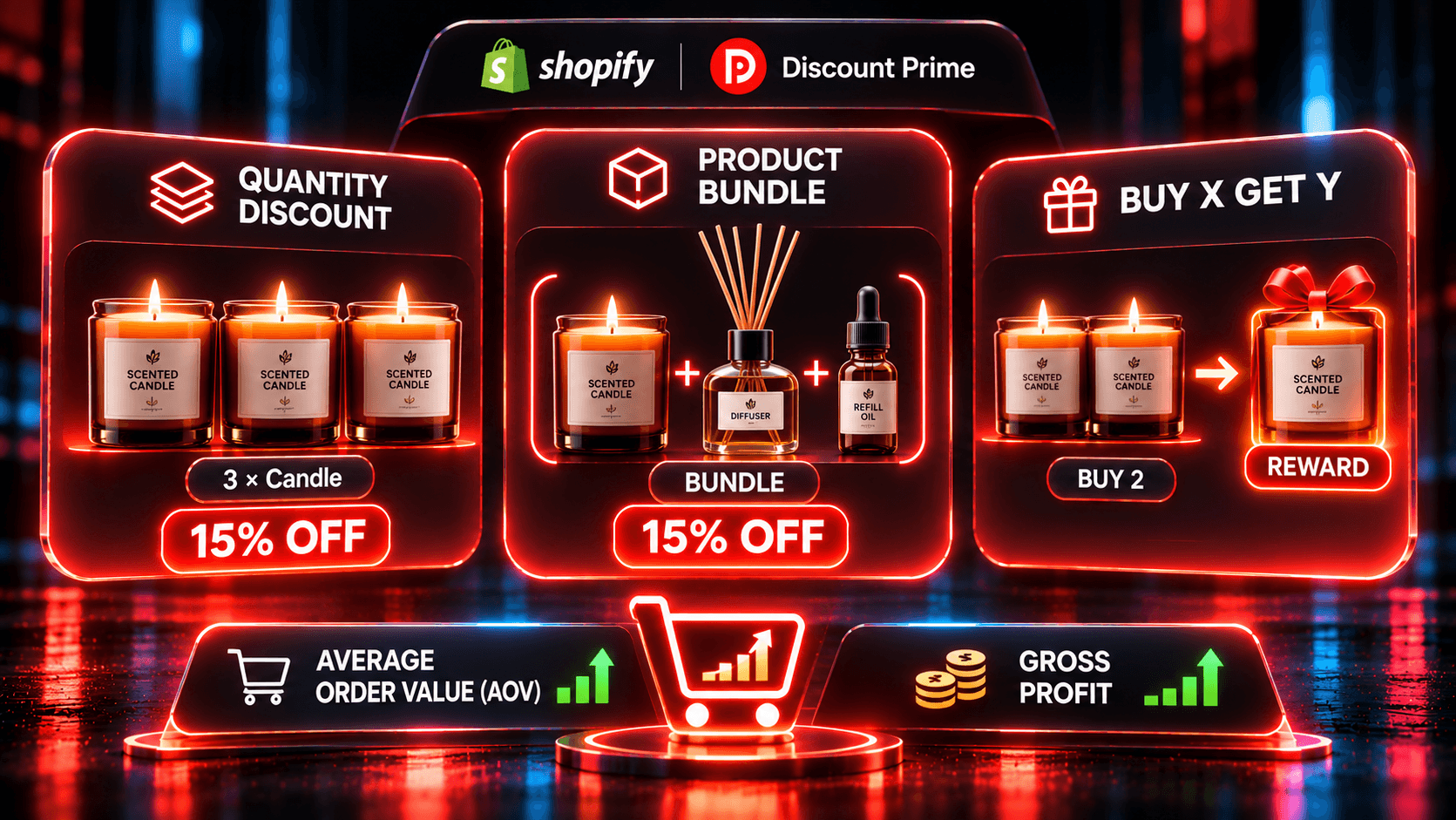
Use a tiered quantity discount when customers already buy several of the same product. Use a product bundle when products go together, and you want customers to add items they wouldn't have picked. Use Buy X Get Y when you want a visible reward on a hero product or a reason to move slow stock.
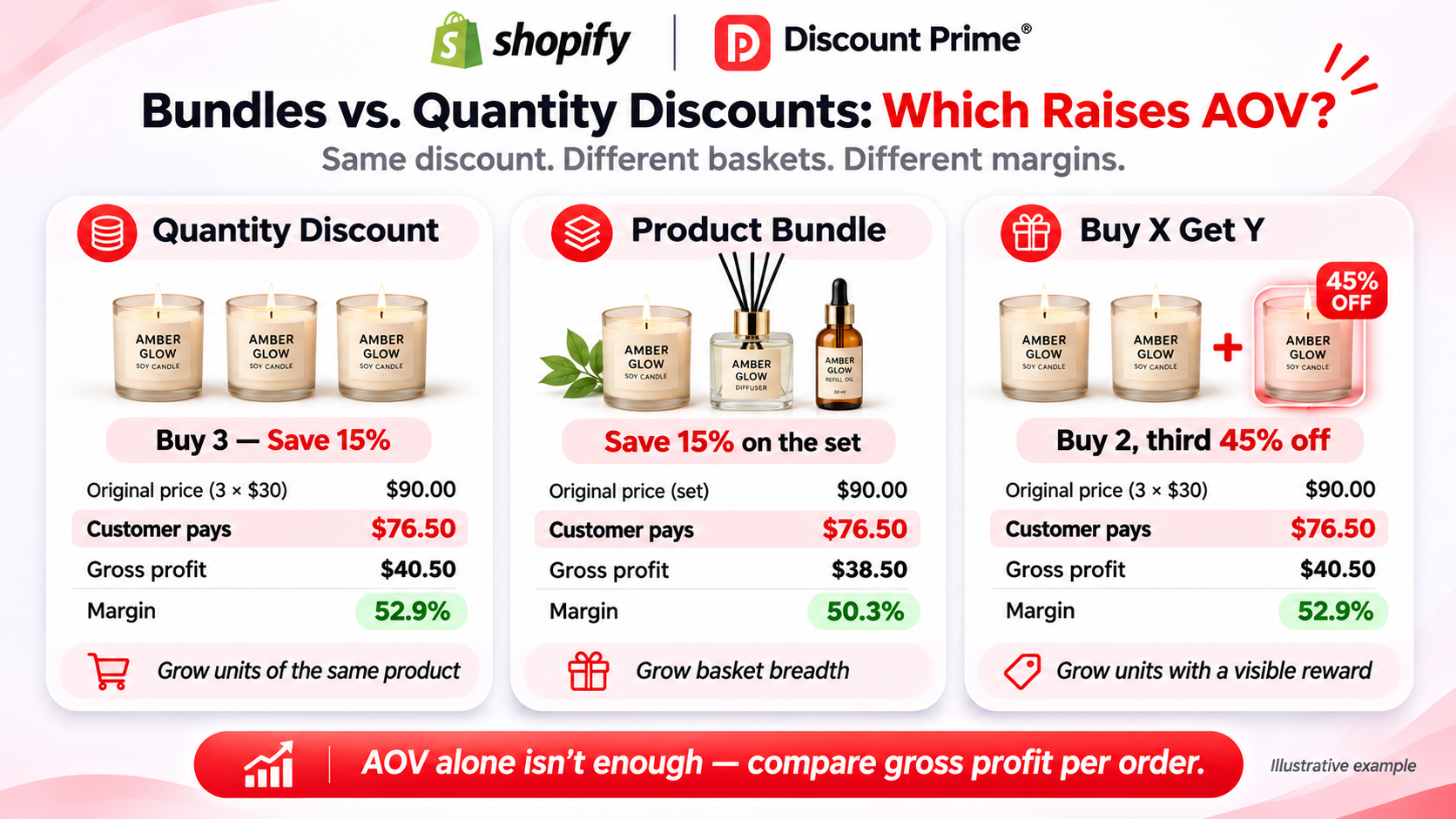
All three can raise average order value. They grow different things: quantity breaks grow units of one SKU, bundles grow basket breadth, and Buy X Get Y grows units with a reward the shopper can see. At the same effective discount, they can reach the same order total, but the margin depends on which items carry the discount. "Buy 2, get 1 free" is not a small offer. It is 33.3% off.
Who this applies to
Stores choosing their first AOV offer and wanting to pick the right mechanic.
Brands with both repeat-purchase products and complementary products, deciding where each offer goes.
Merchants already running one mechanic and wondering whether another would earn more.
Wholesale price lists are a separate case. For per-unit price brackets for trade buyers, see wholesale pricing.
The three mechanics in plain words
Mechanic | How it works | What it grows | Typical use |
|---|---|---|---|
Tiered quantity discount (quantity breaks) | The price drops as quantity of a product rises, for example 10% off at 3+, 15% off at 6+ | Units of the same product | Consumables, refills, multipacks, gifts in quantity |
Product bundle | A set of different items gets a reward once every part is in the cart | Basket breadth | Kits, outfits, routines, starter sets |
Buy X Get Y (BOGO) | Buying a qualifying quantity unlocks a reward item, free or discounted | Units, with a visible reward | Hero products, launches, slow stock as the reward |
The naming overlaps in practice. "Buy 3, save 15%" is a quantity discount. "Buy 2, get a third free" is Buy X Get Y. "Any 3 candles for $75" can be built as a bundle with one slot and a fixed set price. For more on choosing mechanics by how people buy, read beyond % off.
How Shopify treats each one
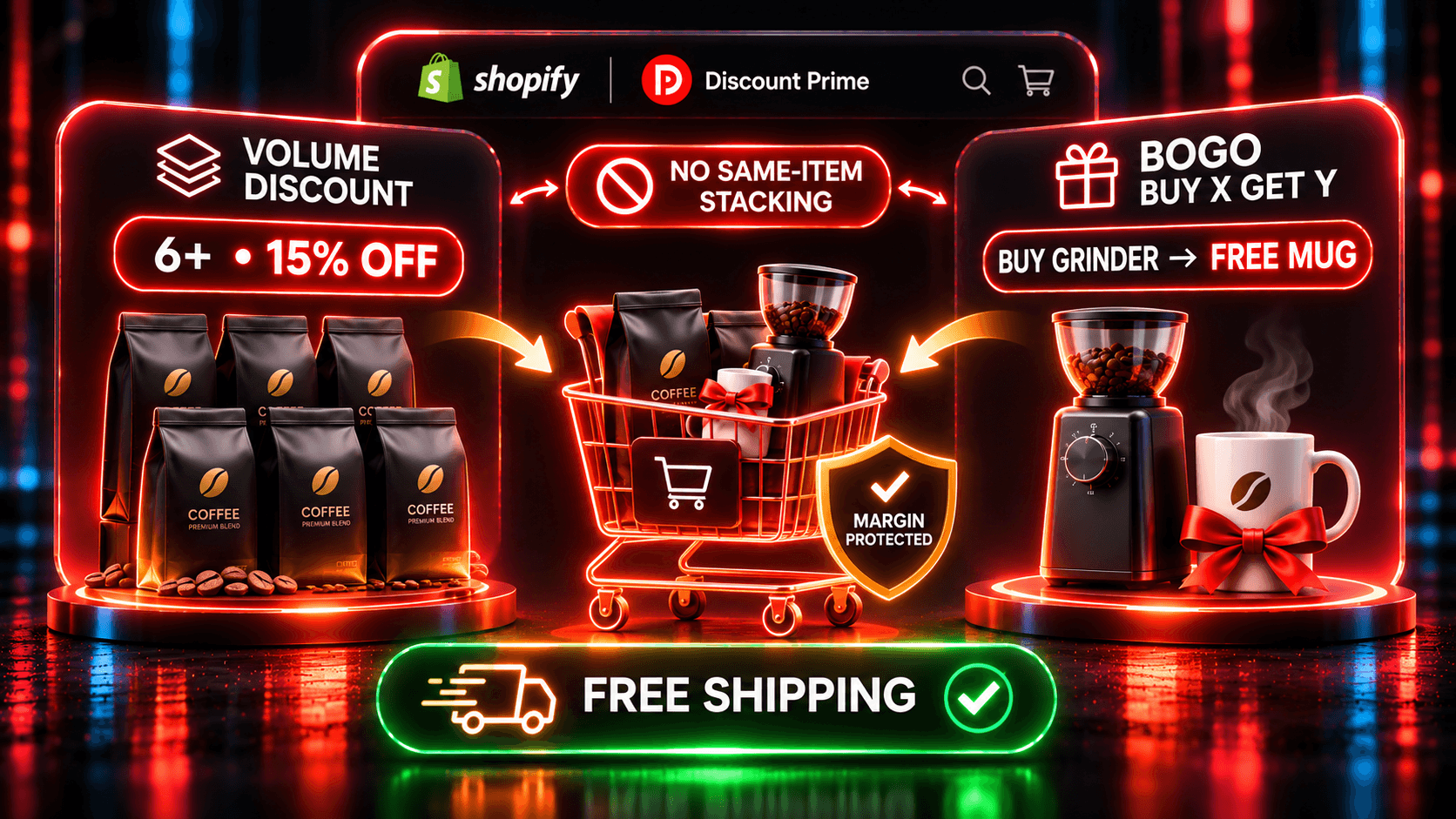
All three are discounts that run at checkout, so they follow Shopify's discount combinations. Quantity tiers, bundle discounts, and Buy X Get Y are product-class discounts. Two product discounts can combine on separate items on any store, but the same line item can take two product discounts only on Shopify Plus. On other plans, a product inside a Buy X Get Y discount cannot take another product discount. So if you run two mechanics at once, give them different products. The full playbook for running them side by side is in BOGO and volume discounts together.
Shopify also offers native options at no cost: quantity-based automatic discounts, Buy X Get Y discounts, and the Shopify Bundles app, which creates a bundle as a product of its own. They are a reasonable start for one or two simple offers.
A worked example: the same 15% three ways
Take a fictional home fragrance store, with illustrative numbers.
Product | Price | Cost per item | Margin |
|---|---|---|---|
Candle | $30.00 | $12.00 | 60% |
Diffuser | $40.00 | $20.00 | 50% |
Refill oil | $20.00 | $6.00 | 70% |
A typical order is one candle: $30.00 paid, $18.00 gross profit. Each offer below gives the customer 15% off $90.00 of products. Gross profit is price minus Cost per item. Shipping and fees are left out to keep the comparison clean.
Offer | Cart | Customer pays | Gross profit | Gross margin |
|---|---|---|---|---|
No offer | 1 candle | $30.00 | $18.00 | 60.0% |
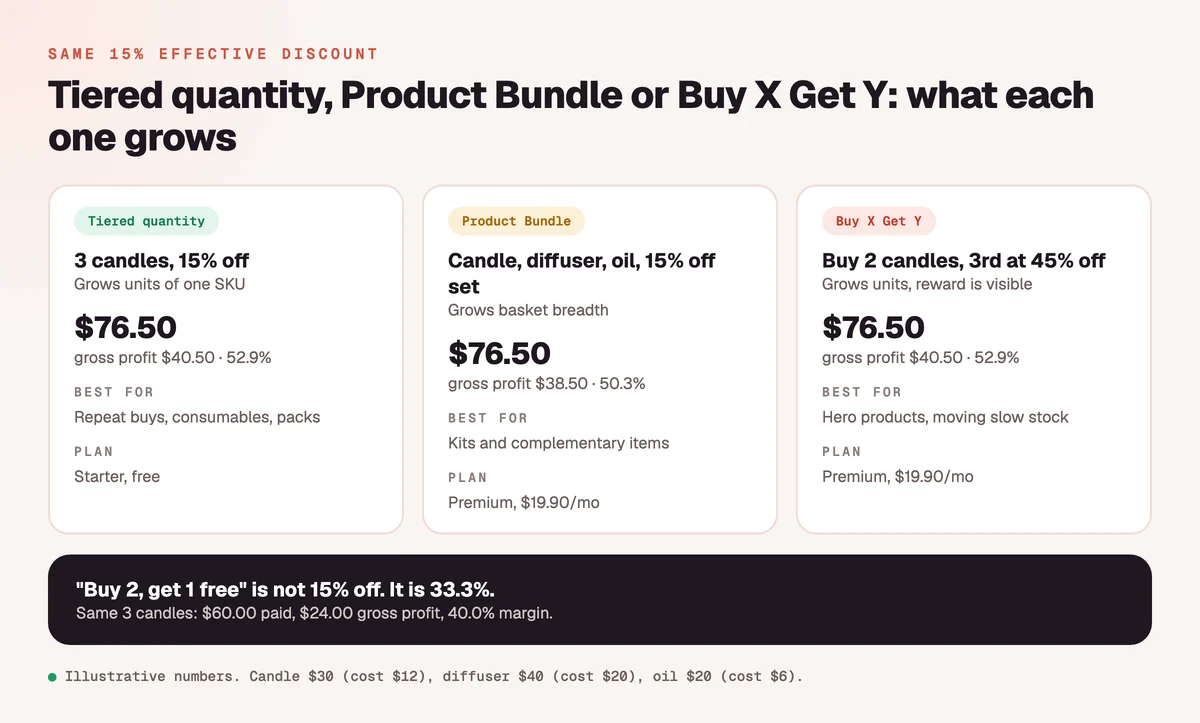
Tiered quantity: 15% off at 3+ | 3 candles | $76.50 | $40.50 | 52.9% |
Product Bundle: 15% off the set | Candle, diffuser, oil | $76.50 | $38.50 | 50.3% |
Buy X Get Y: buy 2, third at 45% off | 3 candles | $76.50 | $40.50 | 52.9% |
Buy X Get Y: buy 2, get 1 free | 3 candles | $60.00 | $24.00 | 40.0% |
What the table shows:
Each 15% offer lifts the order from $30.00 to $76.50, and gross profit per order more than doubles. A discount that grows the basket can lower the margin rate and still earn more per order.
The bundle earns a little less here because the diffuser carries a lower margin than the candle. Put higher-margin items in a set and the bundle can come out ahead. The mix decides, not the mechanic.
"Free" is expensive. A buy 2, get 1 free deal on equal items is 33.3% off. It may be worth it for a launch or for stock you need to clear, but price it as the 33% it is.
Run your own products through the Discount Profit Calculator before you choose a depth.
Which one to pick
Your situation | Best first choice | Why |
|---|---|---|
Customers reorder the same product | Tiered quantity discount | They already want more units; a tier table makes the next step obvious |
Products are used together | Product Bundle | It adds items the customer would not pick on their own |
One hero product drives traffic | Buy X Get Y with a reward from another collection | The hero sells, the reward introduces a second product |
A slow item needs to move | Buy X Get Y with the slow item as the reward | Clears stock without a sitewide sale |
You sell by the case or pack | Tiered quantity or a one-slot bundle with a fixed set price | Customers think in packs; see selling by the case |
Margins differ a lot across items | Bundle built from high-margin items | You choose which items carry the discount |
One way to read it: quantity discounts reward what customers already do, bundles change what they buy, and Buy X Get Y gives them a reason to act now.
Inventory: a discount rule or a product of its own
This is the difference merchants miss most often.
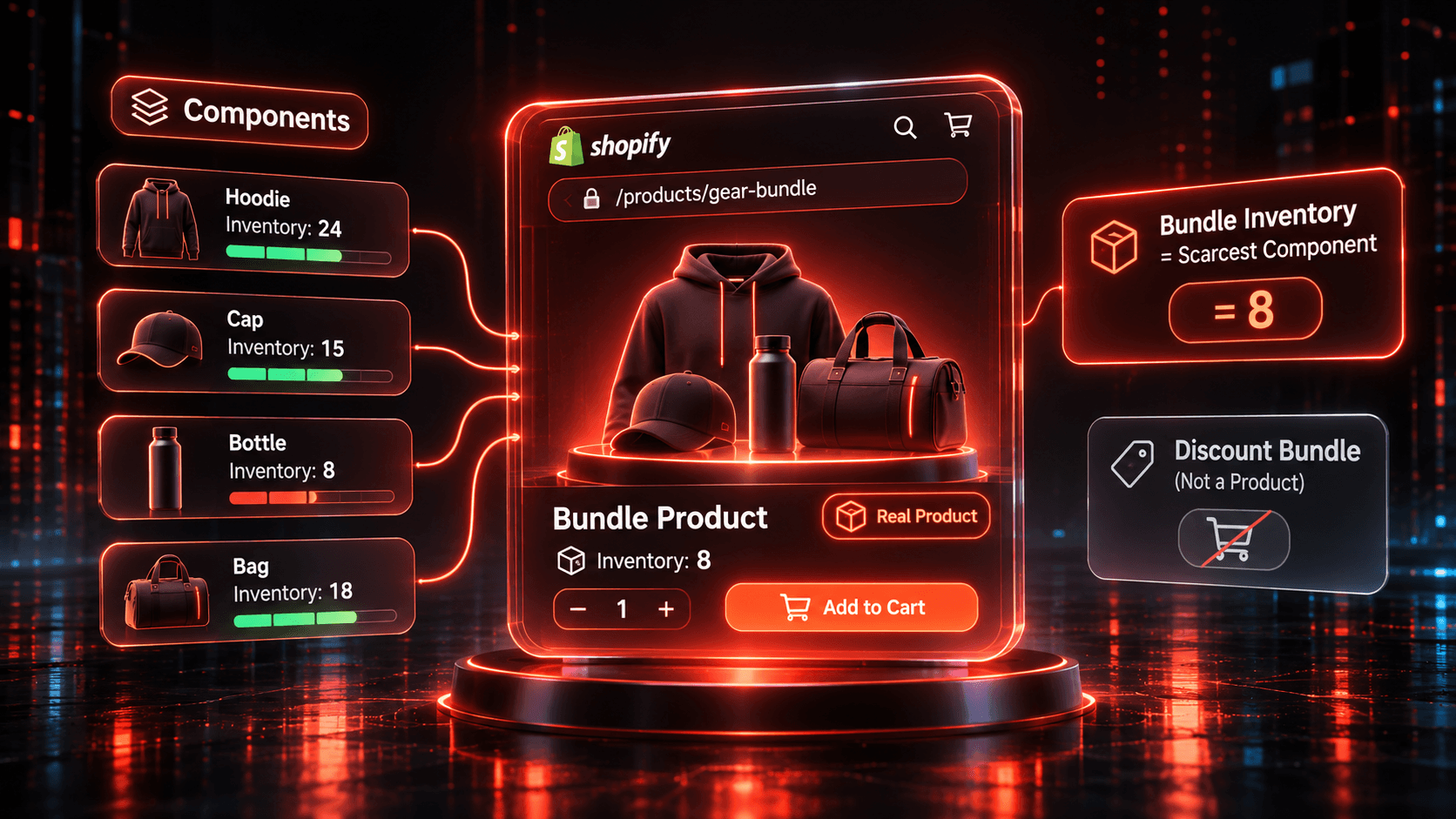
A discount-rule bundle (Discount Prime Product Bundle) sells the real component products. Each component keeps its own SKU and inventory, and the set discount applies when the set is complete. Nothing new to stock, and the parts still sell alone.
A bundle as its own product has its own listing, price and page. In Discount Prime this is a Combo, part of the advanced bundles on Ultimate. Shopify Bundles works this way too.
Quantity discounts and Buy X Get Y never create a product. They change the price of items already in the cart.
The trade-offs and setup are covered in how to sell a bundle as its own product, with real inventory.
How to tell which one is working
AOV alone can mislead you, because a deeper discount almost always lifts the order total. Track three numbers per campaign instead:
Metric | What it tells you | Watch for |
|---|---|---|
Gross profit per order | Whether the bigger basket paid for the discount | It should rise against your no-offer baseline |
Units or items per order | Whether the mechanic did its job | Quantity tiers should add units; bundles should add distinct items |
Share of orders using the offer | Whether shoppers notice it | A low share often means the tier table or set is not visible enough |
Give each test two to four weeks and avoid changing prices in the middle. If two mechanics run at once, keep them on different products so you can tell their results apart. Discount Prime's profit analytics reports gross profit per campaign after product cost and shipping, and shows revenue against a no-discount baseline, which is the comparison that matters here. For why revenue is the wrong scoreboard, see GMV is a vanity metric.
Alternatives and limitations
Shopify native first. Quantity-based automatic discounts, native Buy X Get Y, and Shopify Bundles cost nothing. They do not report gross profit per campaign or show a tier table on the product page, but for a single offer they may be enough.
Any discount lowers the margin rate. The question is whether gross profit per order rises enough to pay for it. Compare orders before and after, with costs filled in, not revenue alone.
Mechanics can collide. On non-Plus stores, the same item cannot take a Buy X Get Y reward and another product discount. Plan which products each offer owns.
Illustrative numbers. The example uses round prices and costs to show the math. Your mix, shipping and returns will change the result.
How to set it up in Discount Prime
Install Discount Prime and fill in Cost per item on your products in Shopify. Profit analytics uses it on every plan.
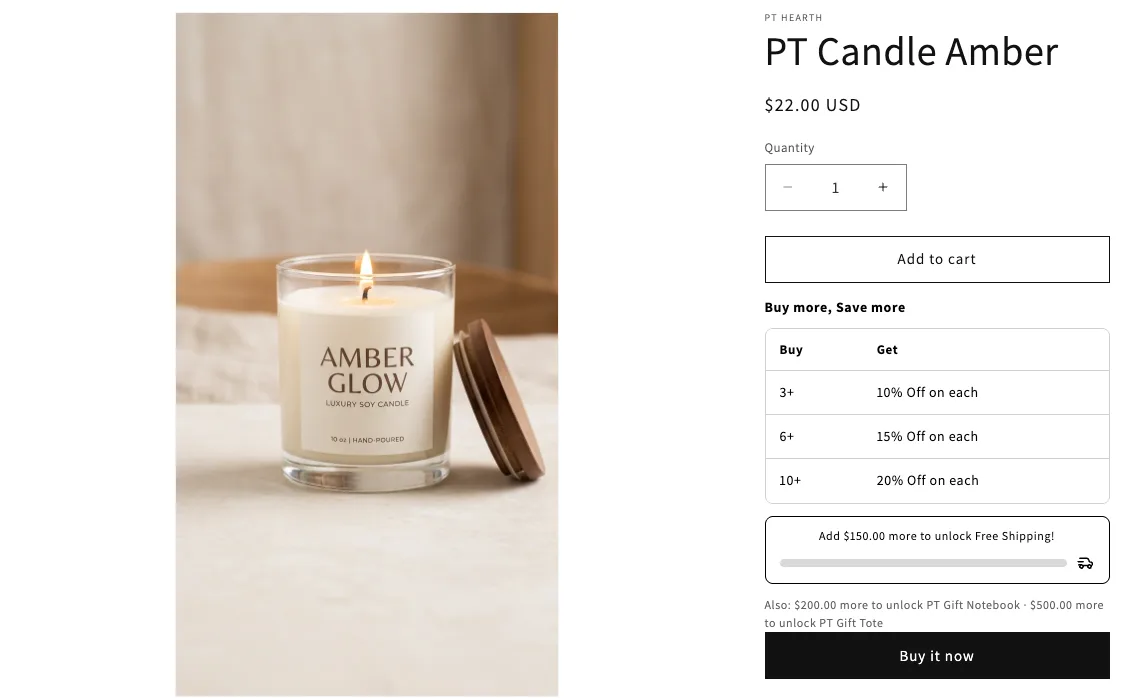
Quantity breaks, free Starter plan. Create a tiered quantity discount with percent or fixed tiers and a min and max per bracket. The pricing table shows the tiers on the product page.
Bundles, Premium ($19.90/mo, 7-day free trial). Create a Product Bundle with up to 6 slots and a reward: % off the set, $ off the set, a fixed set price, cheapest item free, or up to 3 free gifts. Slots by collection, tag, vendor or product type need Prime ($49.90/mo). Combo products are on Ultimate ($99.90/mo).
Buy X Get Y, Premium. Choose the trigger and one of four reward targets: the same product, the cheapest eligible item, a specific product, or an item from another collection. Set once per order or repeat per qualified group.
Give each offer its own products if you run more than one, and test a cart with every offer in it.
Compare gross profit per order for each campaign after two to four weeks, then keep the mechanic that earns more, not the one that sells more.
Sources
Last reviewed: November 7, 2026.
Shopify Help Center, Discount combinations: product discount class, same-line rule on Plus, Buy X Get Y rule.
Discount Prime feature pages: volume discounts, Product Bundle, Buy X Get Y, and plans.
Worked examples use illustrative numbers, not customer data.
Where to go next
Want to test a quantity break against a bundle on your own catalog? Install Discount Prime, start free on Starter, and try Premium free for 7 days.