A discount teaches. The question is only what it teaches: buy now, or wait for the next one.
Every promotion sends a lesson to your customers, whether you intend it or not. Run sales rarely and for a reason, and you teach people that buying now is smart. Run them constantly and predictably, and you teach the opposite: that full price is for suckers and a better deal is always a week away. This post is about staying on the right side of that line, running effective sales without conditioning your customers to stop paying full price.
The core move is simple to state and hard to hold to. Control your cadence so sales stay unpredictable, and favor segmented, behavior-based offers over constant sitewide markdowns. Do that and discounts pull orders forward. Skip it and discounts just relocate orders you would have gotten anyway to a lower price.
What "training customers to wait" actually means
Two things happen when you discount on a predictable rhythm.
First, you erode your reference price, the amount a customer believes the product is worth, formed mostly from what they have seen it sell for. Show a product at 25 percent off often enough and the discounted price becomes the price in the customer's mind. Full price starts to feel like a markup, not a baseline. You have not run a sale, you have quietly relabeled your list price as aspirational.
Second, you activate loss aversion against yourself. Once customers learn your rhythm, buying at full price feels like losing the deal they know is coming. A rational shopper who has seen your monthly sale will simply wait for it. You have converted patient customers into discount-only customers, and impatient ones into people who feel cheated when they miss the window.
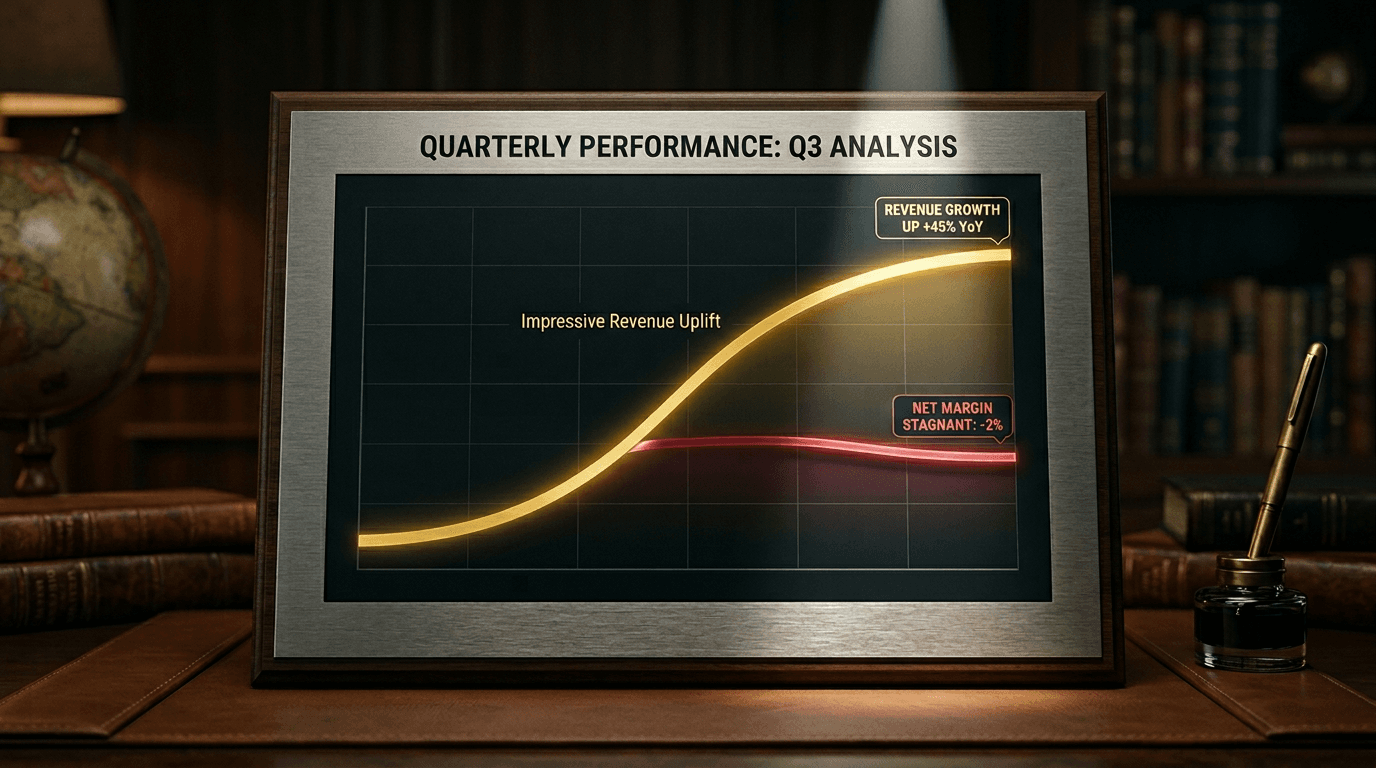
The combined result is falling full-price sell-through. More of your revenue arrives at a discount, your average margin sags, and the sale stops being a lever and becomes a tax.
The J.C. Penney cautionary tale
The most expensive lesson in modern retail pricing is J.C. Penney's, and it cuts both ways.
For years, J.C. Penney ran on constant coupons and near-permanent sales. Shoppers were trained, thoroughly, to never pay the marked price. In 2012, a new CEO, Ron Johnson, tried to fix this in one move: he scrapped the coupons and the endless sales and replaced them with straightforward everyday low prices. On paper, customers were often paying the same or less. In practice, sales collapsed. The shoppers who had been conditioned to hunt for markdowns did not feel they were getting fair prices, they felt they had lost the game they came to play. The company reversed course, but the damage was severe.
The lesson has two edges. Over-discounting trains customers into a habit that is genuinely hard to break. And once they are trained, yanking the discounts away abruptly is its own disaster. The time to manage your cadence is before you have taught the wrong rhythm, not after.
Cadence: make the sale unpredictable and earned
You do not need to stop discounting. You need to stop being predictable about it.
Tie every sale to a reason. A season, a clearance, a product launch, a genuine occasion. A reason makes the sale feel like an event rather than a schedule. "End of summer" teaches nothing about next month. "The 15th of every month" teaches everything.
Vary the pattern. If a customer can predict your next storewide sale from memory, it is too regular. Move the timing, the depth, and the mechanic so there is no rhythm to learn.
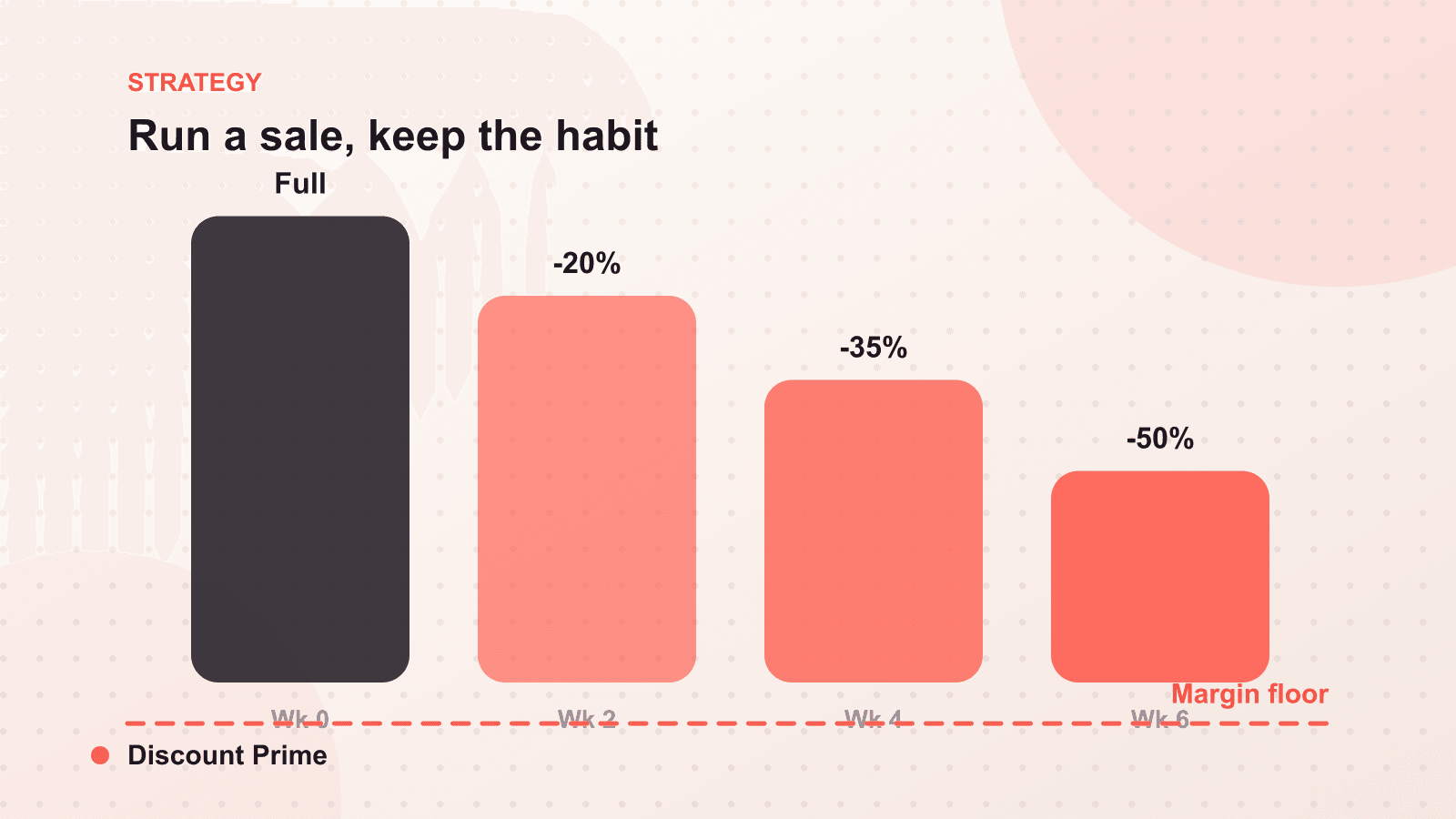
Reserve depth for a job. Deep discounts should do specific work, clearing dead stock, hitting a seasonal reset, moving a discontinued line. A deep markdown with no job behind it is just margin you gave away and a lower reference price you now have to live with.
Segment instead of going sitewide
The single most useful habit for avoiding the training problem: stop making your discounts public and constant. Segment them.
A sitewide sale teaches your entire customer base at once. A segmented offer teaches only the segment, and only for the behavior you want to reward. Some patterns that pull orders forward without conditioning everyone:
- Behavior-based: reward buying more, not just buying. Volume discounts and tiered pricing lower the price only when a customer concentrates spending in one order, so you are buying incremental units, not subsidizing existing ones. Automatic tiers can run always-on without teaching anyone to wait, because the deal is the structure, not an event.
- Group-based: give trade accounts, VIPs, or subscribers their own pricing through customer-specific pricing. Because the offer is gated to a tag and never public, it rewards a defined relationship without lowering the reference price for your whole audience.
- Trigger-based: first-order or win-back offers reach a specific customer at a specific moment, not the whole store on a calendar.
Segmentation is the structural answer to the cadence problem. It lets you discount continuously in some corners while your default catalog holds full price for everyone else.
A worked comparison
Say you sell a $50 product with 50 percent gross margin, and you move 1,000 units a month. Compare two twelve-month strategies.
| Strategy | Pattern | Effect on reference price | Effect on full-price sell-through |
|---|---|---|---|
| Predictable sitewide | 20% off, first week of every month | Falls toward the sale price | Drops, buyers wait for the window |
| Segmented and varied | Always-on volume tiers, occasional reason-based events | Holds near list | Holds, with incremental volume on top |
The first strategy looks busy and generous. Within a few months, a growing share of the 1,000 units sells only in the discount week, and the other three weeks soften as customers learn to wait. The second keeps list price intact for the default buyer while volume tiers and segment offers lift orders at the edges. Same discount budget, opposite lesson taught.
Choosing offers instead of markdowns
If you are deciding between an automatic structural offer and a coded event, our guide to automatic discounts versus discount codes covers the tradeoffs. And if you are designing the price ladder itself, how to structure pricing tiers customers understand walks through depth and anchoring. The through-line is the same: prefer offers that reward a behavior over sales that reward waiting.
Setting this up with Discount Prime
Discount Prime is built for the structural side of this. Volume and tiered pricing let you run always-on, behavior-based offers that lift order size without teaching anyone to wait, and B2B and customer-specific pricing keeps deeper deals gated to the segments that earn them. Use scheduled, reason-based events sparingly on top. The result is a store that can discount all year and still protect the price customers believe your products are worth.