A VIP code sent to a thousand loyal customers is not a private offer. It is a public one with a delay.
The appeal of VIP early access is exclusivity: your best customers and wholesale accounts get in before the crowd, at a price the crowd will not see. The moment you deliver that through a shared discount code, the exclusivity is gone. One recipient posts it, a deal aggregator indexes it, and by the time your official sale starts your "VIP" price is the public price. The fix is to stop gating by a string anyone can paste and start gating by who the customer actually is. Tag the segment, attach a private automatic discount, and the offer can never leave the list.
Why the code always leaks
A discount code is a shared secret, and shared secrets do not stay secret at scale. Send one code to a thousand people and you have not made a private offer, you have published one to a thousand potential distributors. It only takes one. Within hours the code reaches the coupon sites that exist specifically to harvest exactly this, and now the code cannot tell your VIP from a stranger who searched for it, because a code has no idea who is typing it. It rewards knowledge of the string, not membership in your segment.
That breaks two things at once. The margin math you did for a small VIP list is now running against your entire BFCM traffic. And the exclusivity you were actually selling, the feeling of being early and chosen, evaporates the instant the price is everywhere.
Gate by identity, not by knowledge
The alternative is to make the price a property of the customer rather than a property of a code. You tag the customers who belong in the segment, and you attach an automatic discount that applies to that tag. A logged-in VIP sees the early-access price with nothing to enter. Everyone else sees the normal price. There is no code, so there is no string to leak, so there is nothing for a deal site to publish.
This is the same mechanism that makes wholesale pricing work without a separate storefront, pointed at a holiday use case. The customer's identity, expressed as a tag, is the key. The offer is bound to the person, and a person cannot be pasted into a forum.
A three-segment early-access plan
Here is a concrete shape for a store running early access before the public BFCM sale.
| Segment | Tag | Access window | Offer | Why it is gated |
|---|---|---|---|---|
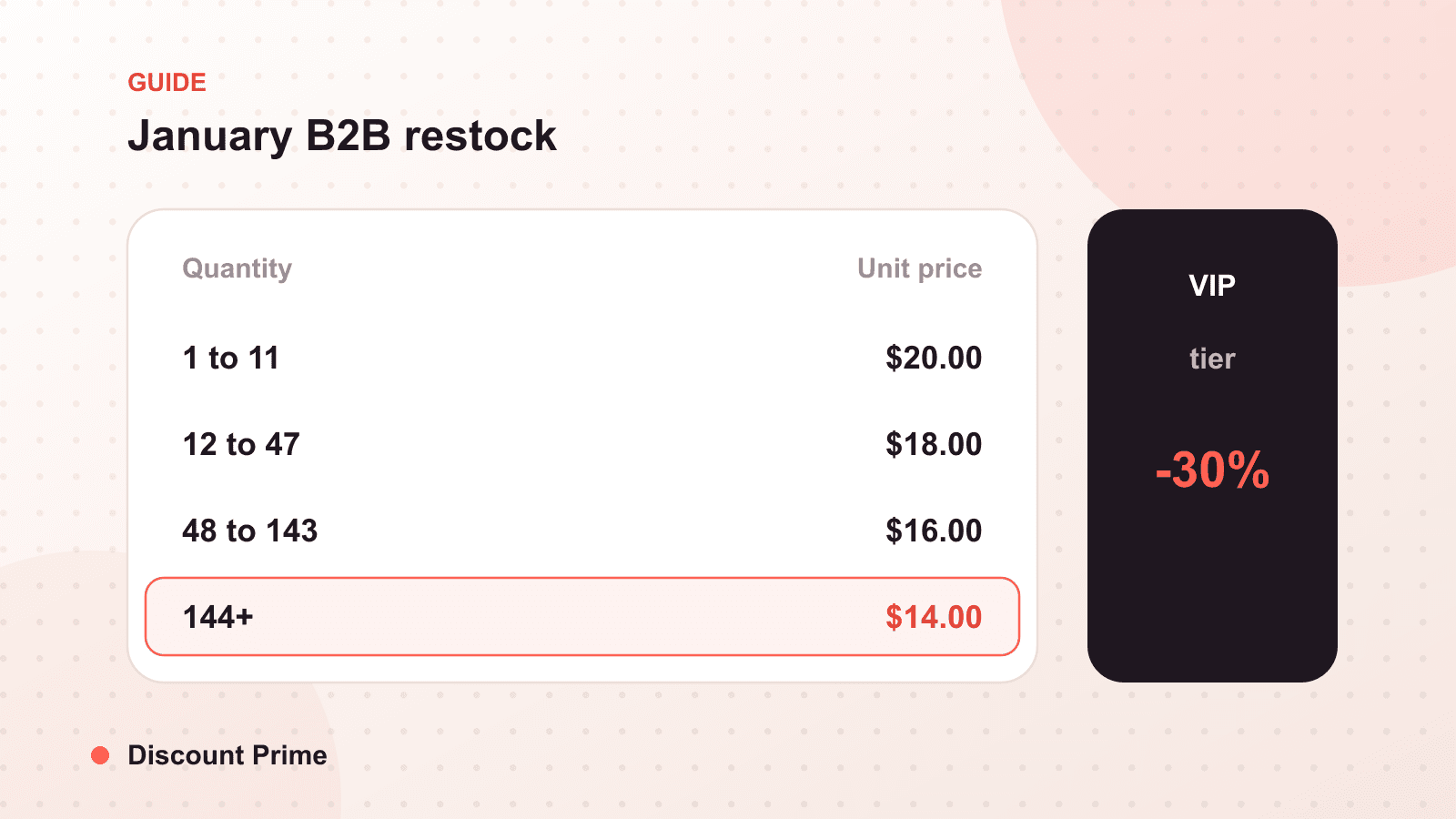
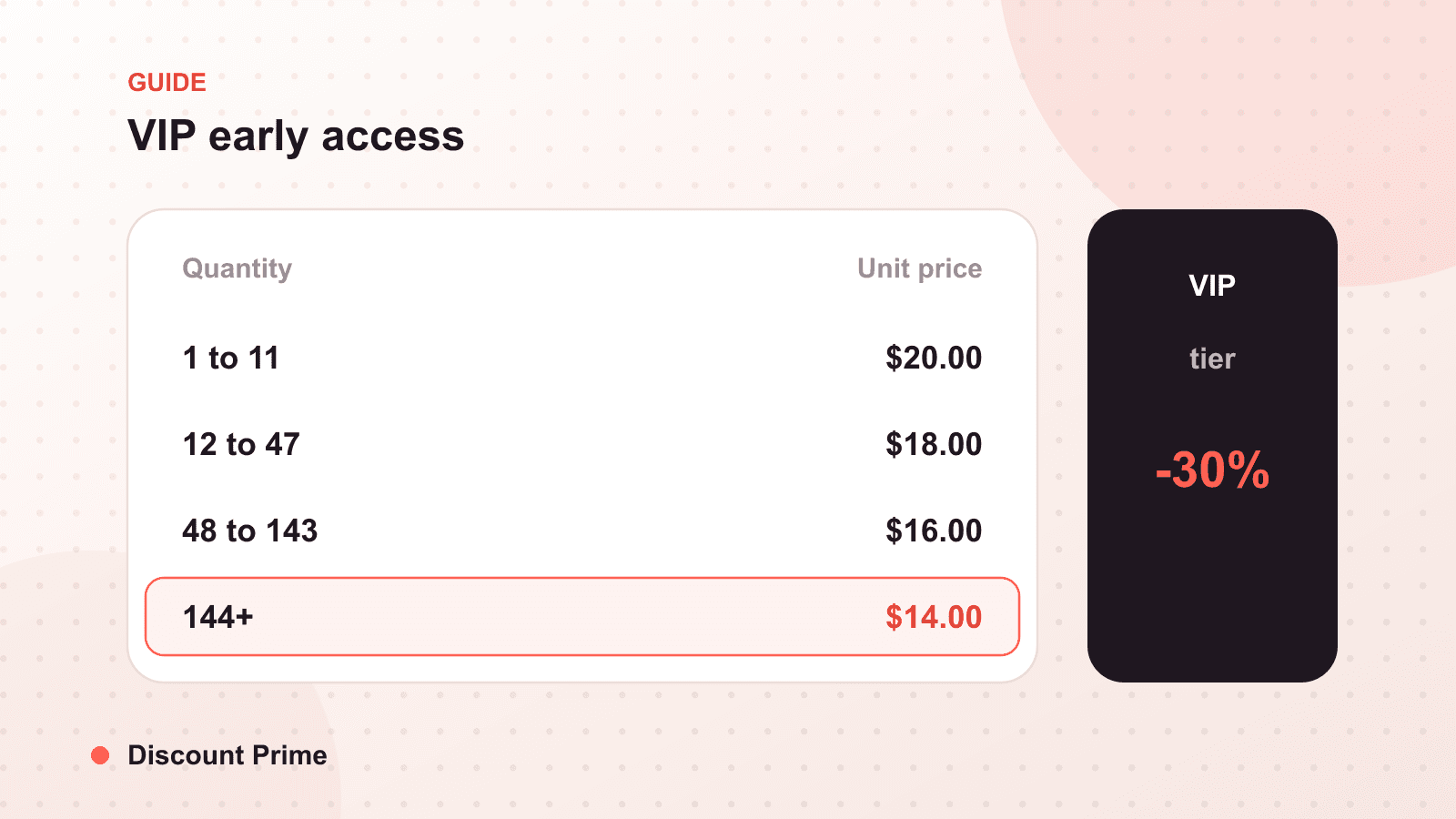
| VIP retail | vip | 48 hours early | Deeper volume tiers, first pick of limited stock | Rewards loyalty, keeps depth off the public rate |
| Wholesale | wholesale | 72 hours early | Negotiated case pricing, no public visibility | Pricing is confidential and account-specific |
| Lapsed / win-back | winback | 24 hours early | Single reactivation offer | Spends discount on demand you do not already own |
Each row is one tag and one rule. None of them is a code. The wholesale row is the one that matters most to get right, because wholesale prices are often contractual and must never appear publicly. Tag-gating is not just convenient there, it is the correct way to keep negotiated pricing private while still letting those accounts restock early.
The details that make it hold
Tags have to be clean going in. Segment-first pricing is only as good as the tags behind it. Before the window opens, audit the tag: who is in it, who should be, who slipped in from an old import. A wrong tag is a wrong price.
Require login for the segment price. The automatic discount should key off the authenticated customer's tag, so the price is tied to being signed in as that customer, not to visiting a URL. This is what closes the loophole a shareable link would reopen.
Floor the whole thing. VIP depth plus a volume tier plus free shipping can compound further than you modeled. A profit floor under the segment rules blocks any combination that would drop an early-access order below your margin line, so you can be generous with your best customers without hand-checking every cart.
Keep the segments from overlapping badly. Decide what happens when a customer carries two tags. A wholesale VIP should get one coherent price, not two discounts that stack into a loss. This is a combination decision, and it deserves the same explicit rule as any other.
Setting this up with Discount Prime
Tag-based B2B and customer-specific pricing and wholesale rules run as private automatic discounts, so early access is bound to the customer and never to a code. Attach your volume tiers to the same segments, set the floor, and audit the tags before the window opens. For the broader case that tags are underused, our post on segment-based pricing makes the argument in full, and if you are still deciding how deep to go this season, the targeted-not-sitewide BFCM piece is the strategic frame this tactic serves.