The retail calendar has a quiet second peak, and it lands in the first two weeks of January when your wholesale buyers are staring at empty shelves.
If you sell to other businesses, January is not a slow month. It is your strongest reorder window of the year. Retail buyers spend December selling through the inventory they stocked for the holidays, and they walk into January with thin shelves and a fresh quarter of budget. The suppliers who capture those reorders are the ones whose wholesale pricing was already clear, already live, and already easy to order against before the new year started.
This post explains why the January restock happens, what wholesale buyers actually need from your pricing, and how to set it up so the reorder comes to you.
Why January is the B2B restock window
Three things line up at once in early January, and each one pushes toward a reorder.
Shelves are empty. A retailer that merchandised hard for November and December has sold through its holiday stock. The floor and the stockroom are both lighter than they have been since summer. Empty shelves are a restock trigger on their own.
Budgets reset. Many retailers run on a calendar fiscal year or a quarter that starts in January. That means fresh open-to-buy dollars, the budget a buyer is allowed to spend on new inventory. December's spend is closed; January's is open.
The pace slows down enough to plan. December is execution. January is planning. Buyers finally have the hours to review what sold, decide what to reorder, and place structured purchase orders instead of reactive ones.
Put those together and you get a buyer who has room on the shelf, money to spend, and time to think, all in the same two weeks. That is as motivated as a wholesale account gets.
What wholesale buyers actually need from your pricing
A B2B reorder is not an impulse buy. The person placing it is building a purchase order they have to justify, so they need your pricing to be legible and stable. Three things matter most.
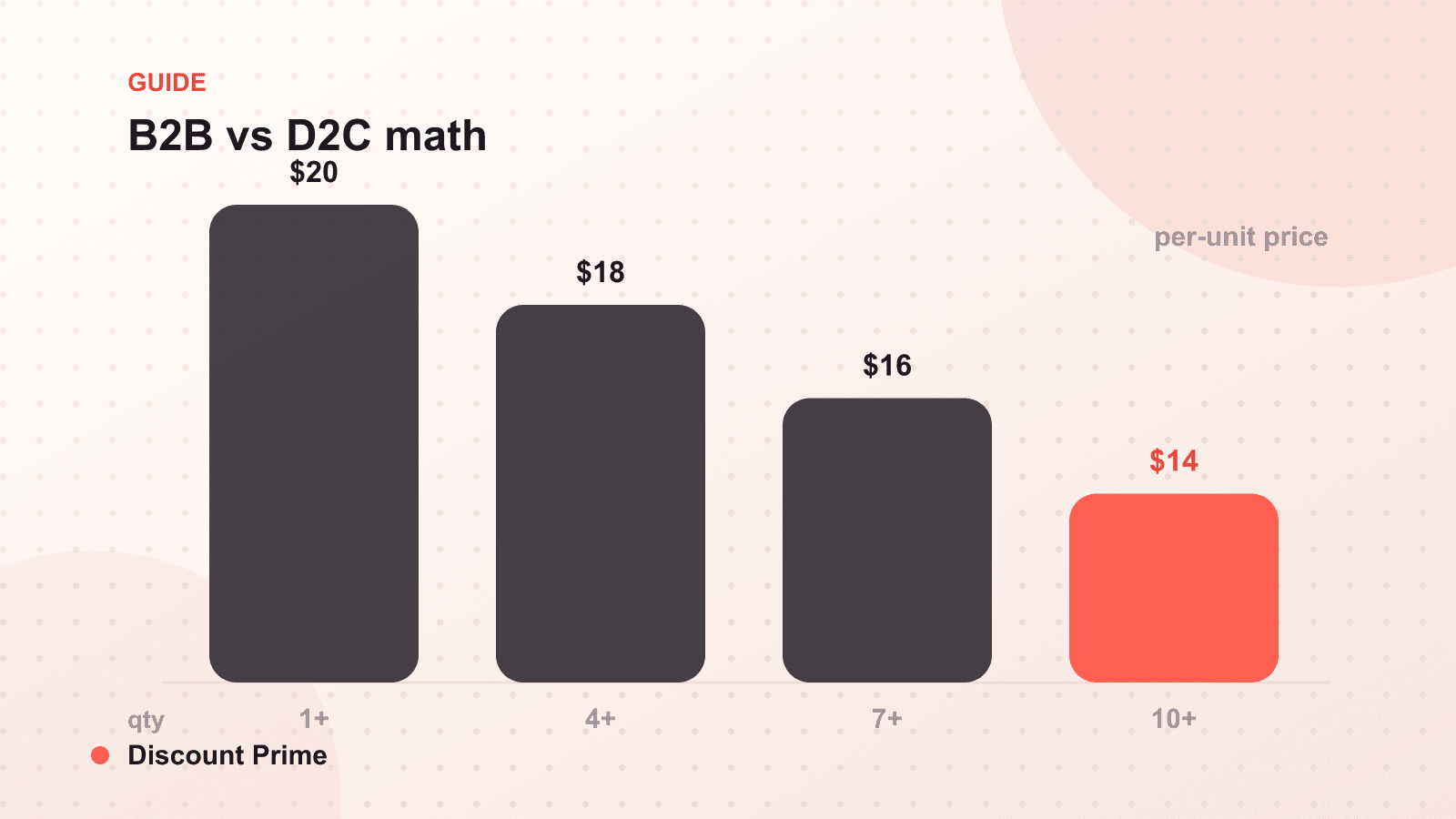
Per-unit clarity. A wholesale buyer thinks in landed cost per unit, not in percentage off. "This case lands at $6.40 a unit" is a number they can mark up and defend. Show the per-unit price at each quantity break, not just a total discount.
Case-pack alignment. Wholesale moves in cases and pallets, not single units. If you pack 12 to a case, your first tier should start at 12, not 10. Pricing that does not match how you actually ship forces the buyer to do conversion math, and math is friction.
Predictability. A retail shopper reacts to a limited-time sale. A wholesale buyer plans around stable pricing. If your wholesale tiers move every month, you make forecasting impossible and you push careful buyers toward suppliers they can model. Set the tiers and leave them alone.
A worked example: pricing the reorder
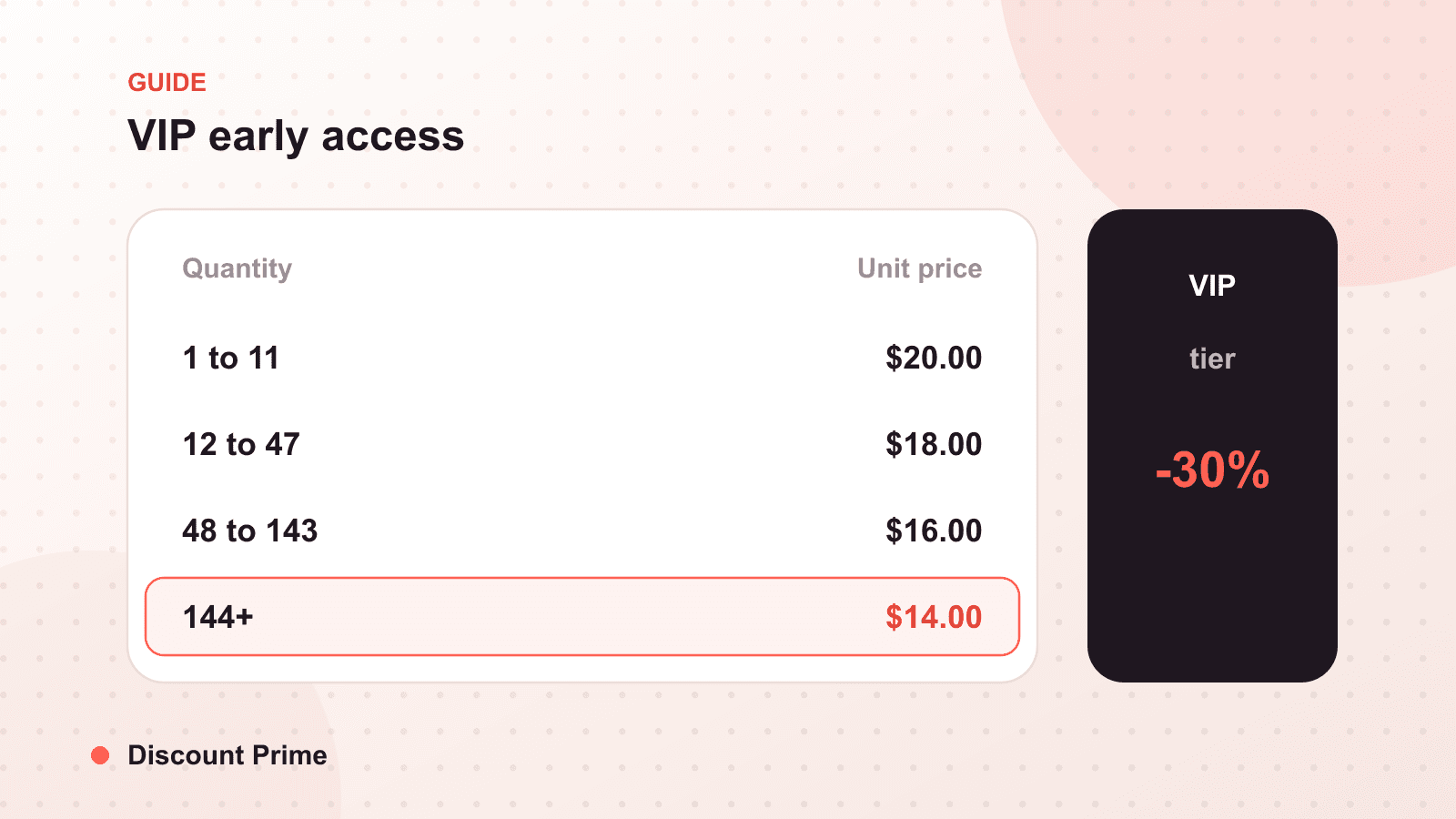
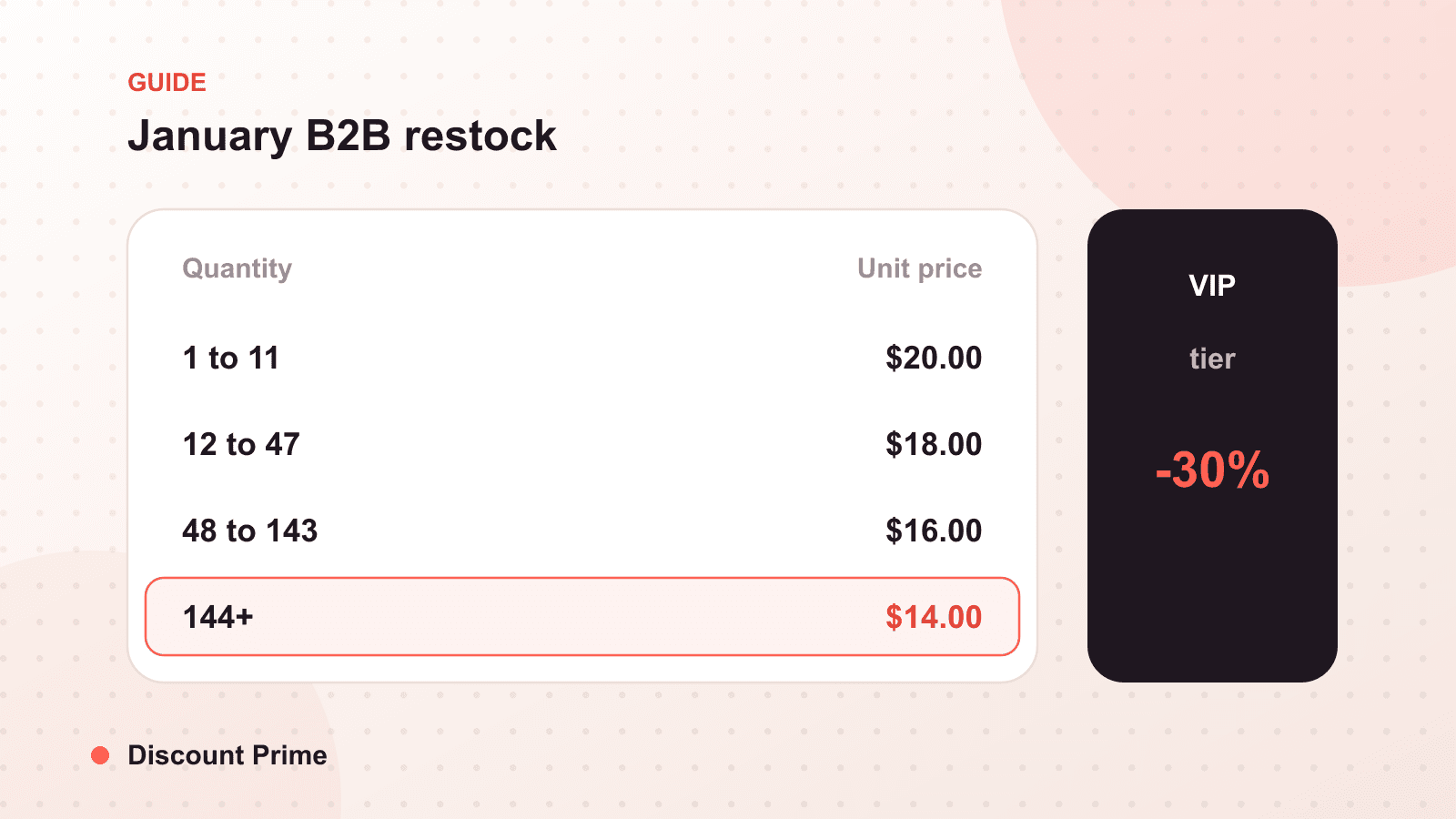
Say you supply a candle that retails for $24 and you pack it 12 to a case. Here is a wholesale tier structure a buyer can read at a glance.
| Order quantity | Per-unit price | Effective discount | Typical buyer |
|---|---|---|---|
| 1 case (12 units) | $10.00 | Base wholesale | New or small account |
| 4 cases (48 units) | $9.20 | 8% off base | Established boutique |
| 12 cases (144 units) | $8.40 | 16% off base | Multi-location or chain |
Notice what this does. The minimum order is a full case, so you never pick a single unit. The middle tier is the one you want most accounts to land on, and the top tier makes it look reasonable. And every row is expressed per unit, because that is the number the buyer marks up. At $9.20 landed, a $24 retail keeps healthy room for both of you.
Before you set the deepest tier, check it against your own cost. A 16% wholesale break is only safe if your margin at that price still clears fulfillment and overhead. This is exactly where margin visibility earns its keep, and our profit analytics exists so the number you discount to is a number you actually chose.
How to set this up before the new year
You want wholesale pricing live and gated before the last week of December, because that is when buyers start drafting January orders. A simple sequence:
- Tag your verified wholesale accounts. Assign a single customer tag, such as
wholesale, to every approved B2B buyer. Retail shoppers never see wholesale pricing; tagged accounts always do. - Attach quantity tiers to case packs. Build your breaks at real case and pallet quantities so the pricing matches your fulfillment.
- Set a minimum order quantity. Make the MOQ one full case so small, unprofitable orders never reach your pick line.
- Publish the per-unit price at each tier. Give buyers the number they will actually plan against.
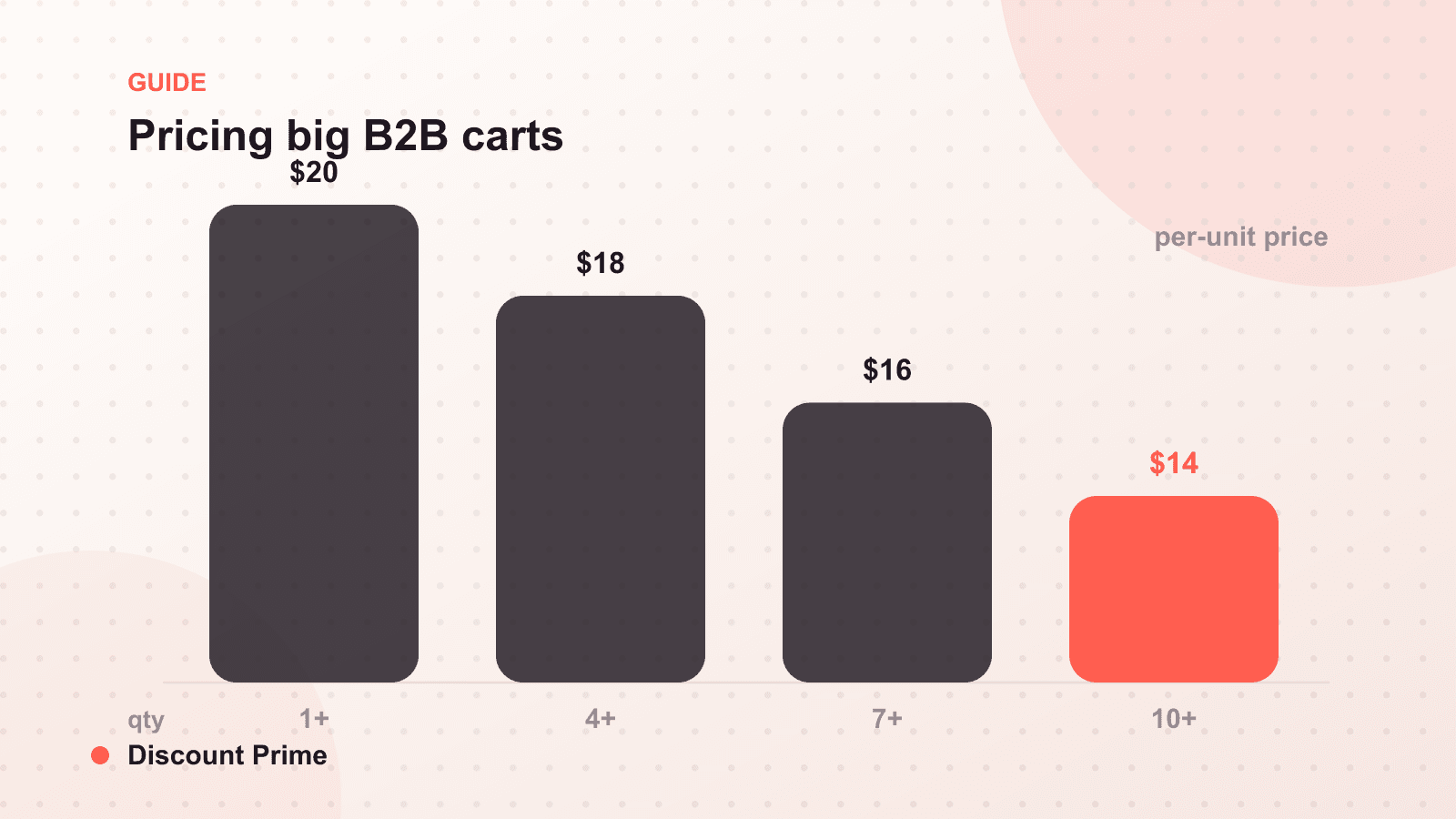
Tag-gated pricing like this runs on standard Shopify through Shopify Functions, so you do not need Plus to do it. Our B2B pricing and wholesale pricing tools handle the tagging and the tiers, and bulk discounts covers the case-and-pallet math for big carts.
The mistake that loses the January order
The most common way to lose a January reorder is not a pricing mistake, it is a timing mistake. Stores that spend December in holiday-sale mode often forget to flip attention to their wholesale channel until the retail rush ends, and by then the purchase orders are already written. If you ran a heavy consumer promotion this season, plan its wind-down deliberately, the way we covered in post-holiday pricing, and make sure the B2B pivot happens on the same schedule.
The same discipline that keeps consumer sales from leaking codes, which we walked through in segment-first BFCM, is what keeps wholesale pricing where it belongs: visible to the accounts that earned it, invisible to everyone else.
Setting this up with Discount Prime
If January is your restock season, spend an afternoon in December getting the tiers right. Tag your wholesale accounts, align your breaks to case packs, and set a minimum order that protects your pick line. Discount Prime runs all of it natively through Shopify Functions, so verified buyers see wholesale pricing the moment they log in. You can find the app on the Shopify App Store and have your January pricing live before the first purchase order lands.