Black Friday is ten days away. If this is your store's first BFCM, you have probably read advice written for brands with a marketing team, an agency, and a promo calendar that started in August. This post is not that. It is a framework for a small store, run by one or two people, deciding this week what to offer.
Last year merchants on Shopify sold $7.5 billion over BFCM weekend. The volume is real, but so is the margin damage for stores that discount in a panic. The difference is usually not effort. It is having decided three things in advance.
Decision one: your hero offer
Pick one offer that headlines everything. Not five offers. One.
The strongest BFCM offers for small stores share a shape: they are simple to say in a single line ("Buy 2, get 20% off everything in your cart"), they reward larger orders rather than just discounting existing demand, and they do not require the customer to do homework.
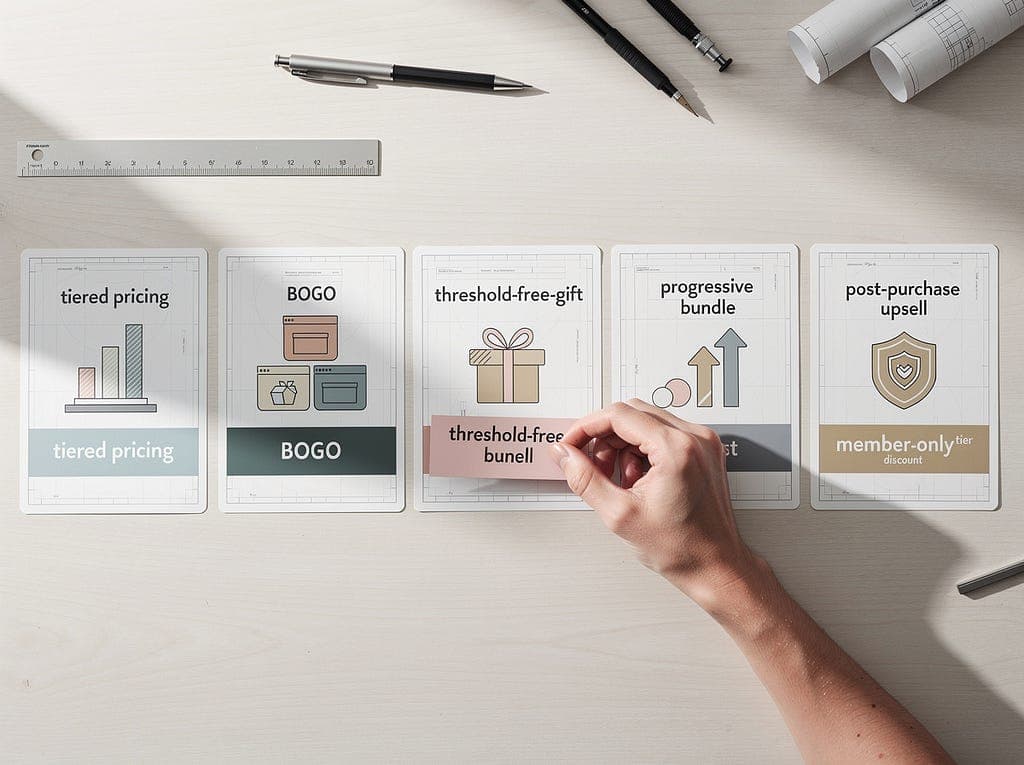
Quantity-based offers deserve special attention here. A sitewide 20% code discounts every order, including the customer who was buying anyway. A volume offer ("save 20% when you buy 3+") only pays out when the order grows. During the highest-traffic weekend of the year, that difference compounds fast. A free shipping threshold is another shape that fits a small store well: it is easy to say and it nudges order size upward instead of cutting into every unit's margin. If you want the deeper mechanics behind quantity-based offers, our complete guide to volume discounts covers tier design end to end.
Decision two: your margin floor
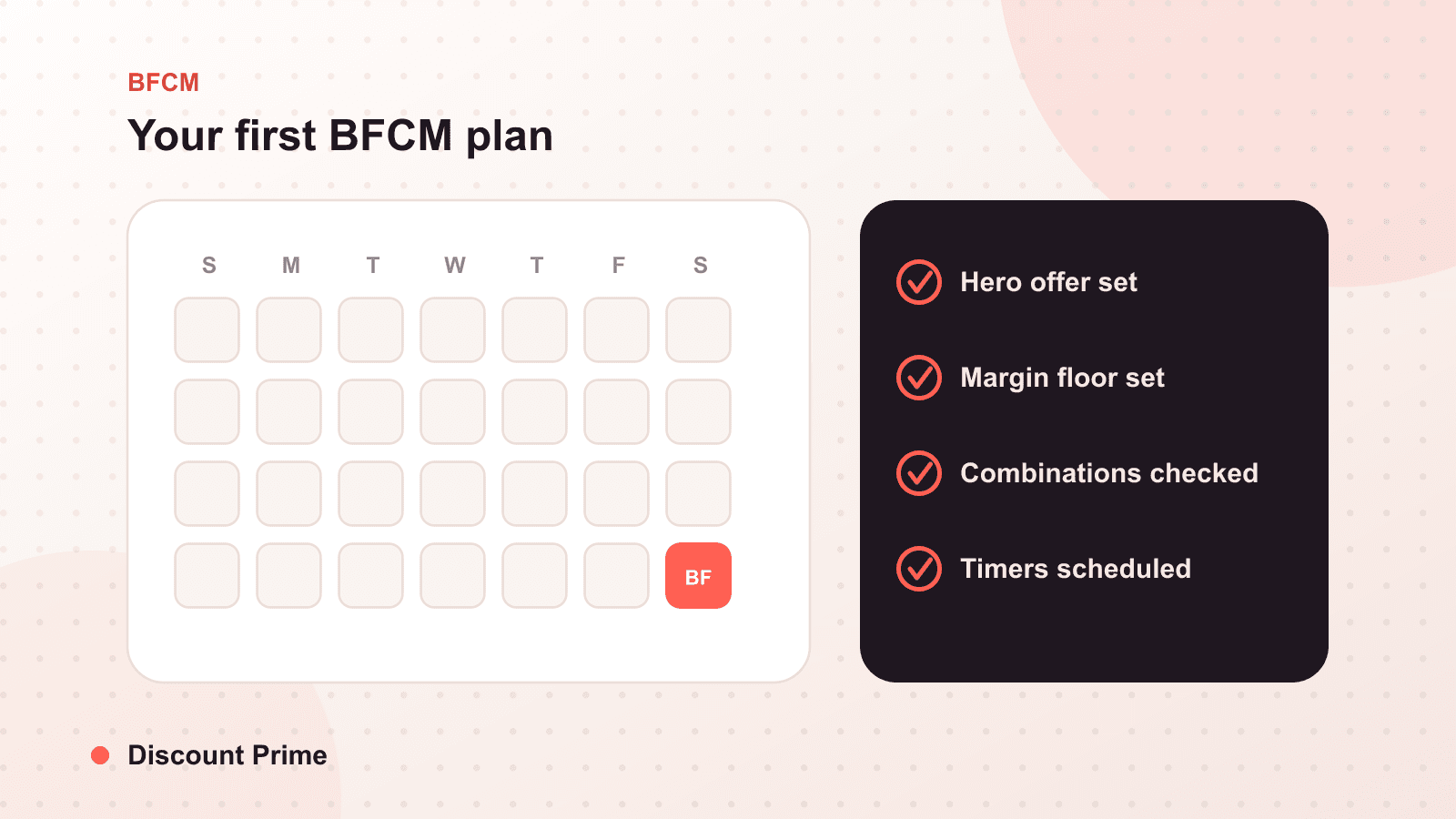
Before you pick a number, find the discount level at which your average order stops making money. Take your typical order, subtract product cost, shipping subsidy, transaction fees, and packaging. The number that remains is what you are negotiating with when you choose between 15% and 25%.
Write the floor down. The reason to do this now, ten days out, is that BFCM has a way of generating pressure to go deeper mid-weekend when a competitor's email lands in your inbox. A number decided calmly beats a number decided at 11pm on Black Friday.
Two protections worth setting up in advance: exclude your handful of lowest-margin products from the hero offer, and decide explicitly whether your offer can combine with any other active discount. Accidental stacking is how a planned 20% becomes an actual 35%.
Decision three: what you will skip
Things small stores can safely not do this BFCM:
- Hourly flash deals. They reward whoever happens to be online and punish everyone else, and they require a war room you do not have.
- Doorbusters below cost. Loss leaders work when you have the traffic to convert the loss into basket size. Most small stores do not, yet.
- Extending the sale "one last time" twice. It trains your list to ignore every deadline you ever set again.
The 10-day checklist
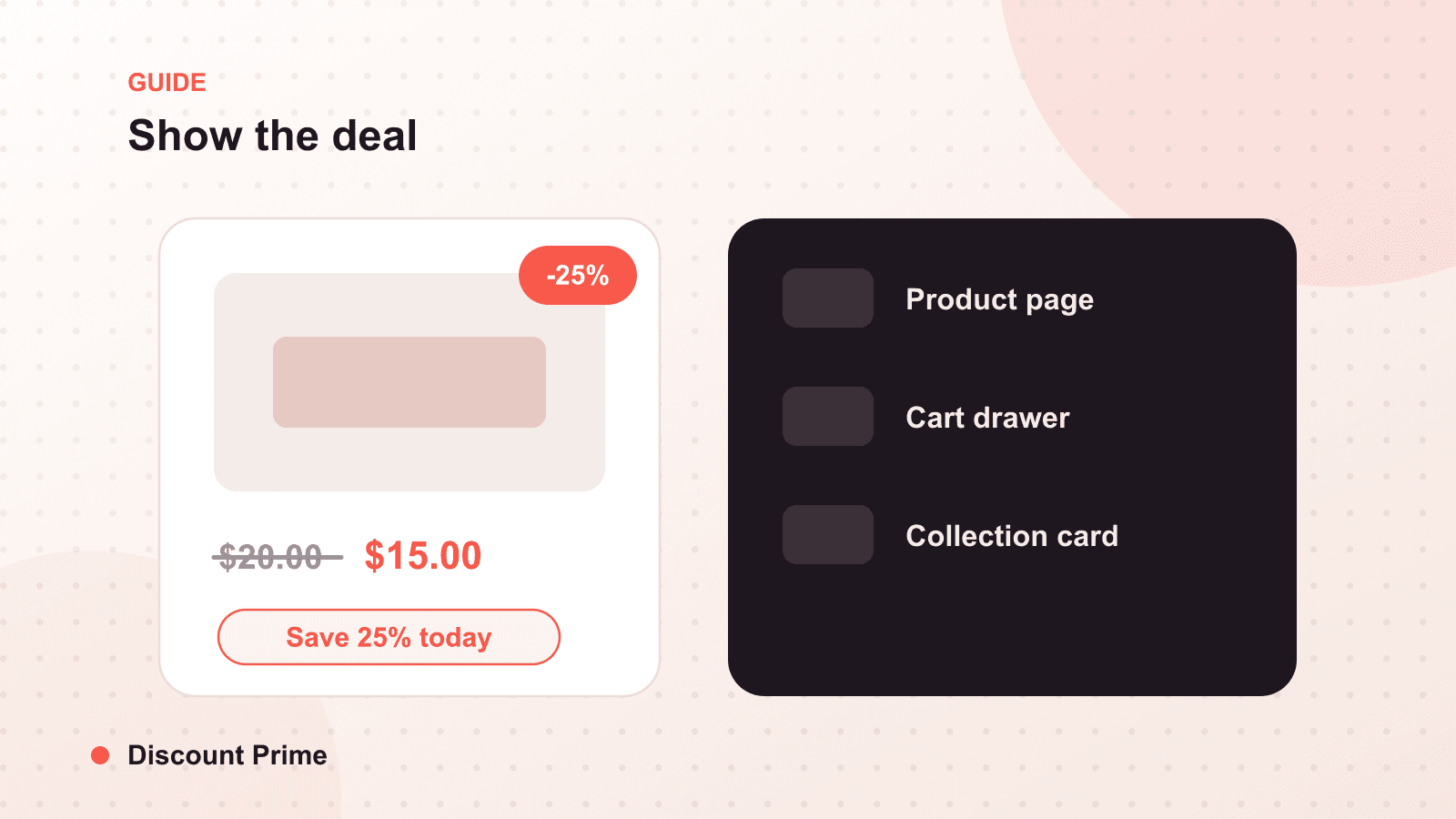
Between now and Black Friday: set up the hero offer and test it in an incognito cart, including the mobile view. Check that the offer displays before the cart, not only in it; a discount nobody sees is a discount that does not convert. Schedule the start and end times, in your store's timezone, and confirm what happens to carts open at the boundary. Draft two emails: the announcement and the last-day reminder. That is enough.
After the weekend
Keep one note for December: which products actually drove the volume, and at what real margin. Your first BFCM produces something more valuable than the weekend's revenue, which is a baseline. Next year's plan gets built on it. We later wrote up how our own first BFCM went, from a builder's seat, in we launched a discount app six weeks before BFCM.
If your hero offer is quantity-based, Discount Prime handles the tier setup, the product-page display, and the scheduling. But whatever tooling you use, the framework is the point: one offer, one floor, a short list of things you deliberately skipped.