Read a Shopify Editions release for its features and you will be busy for a week; read it for its direction and you will know what to build for the next two years.
Shopify Editions Winter '26 has landed, and like every edition it arrives as a wall of announcements. The useful move is not to catalog all of them. It is to ask what the release signals about where the platform is taking commerce, and then to act on the two or three shifts that actually touch how you price, discount, and check out. Through that lens, Winter '26 is consistent with everything Shopify has been telling merchants for a while: custom logic belongs in Functions, structured product data is now infrastructure, and margin discipline matters more every quarter.
This is our read for pricing and discount merchants specifically. We do the same filtering every edition, most recently for Winter '25 and the AI-heavy Summer '25 Horizon release, because the trend line across editions says more than any single feature.
The three signals that matter for pricing
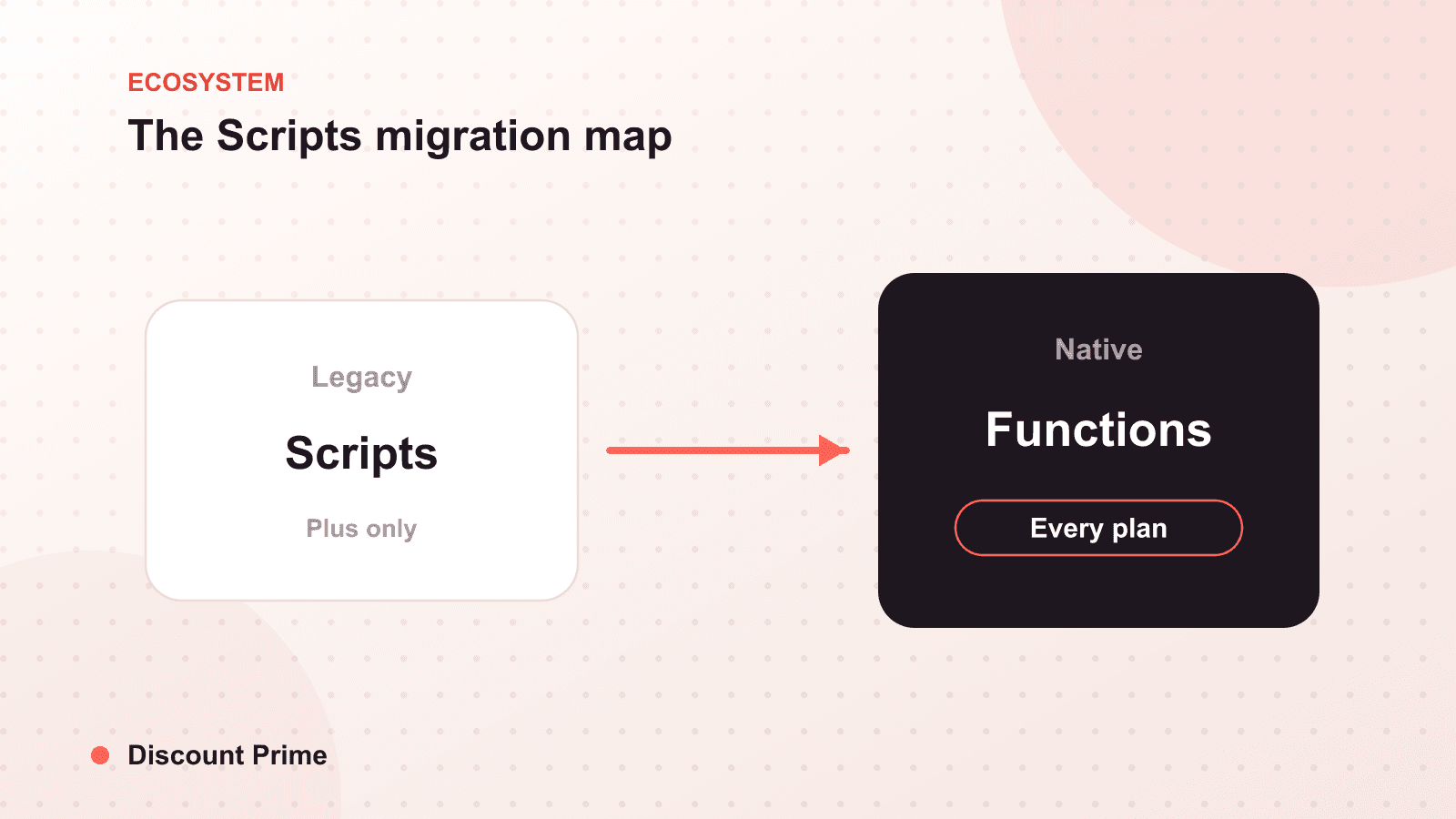
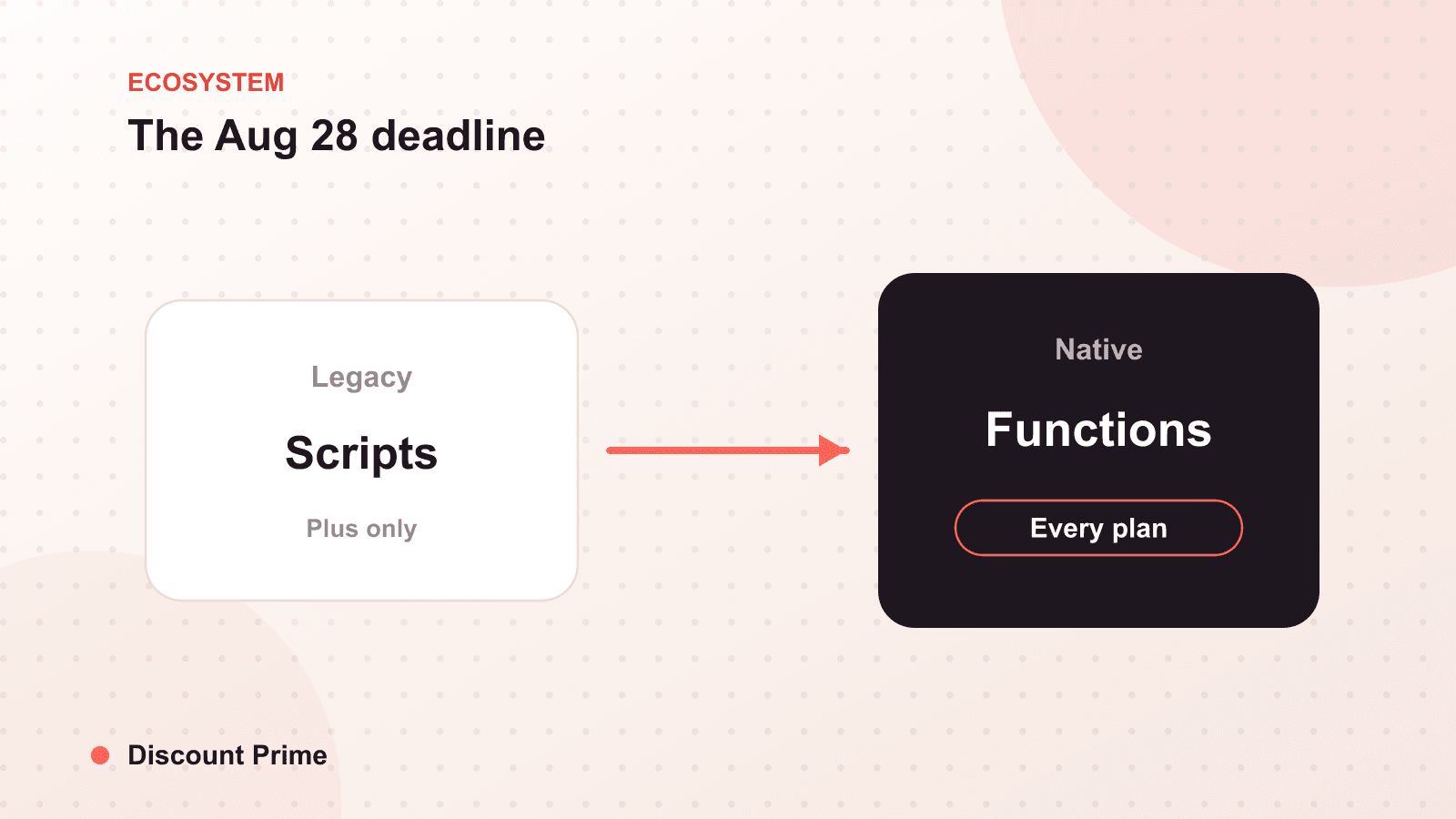
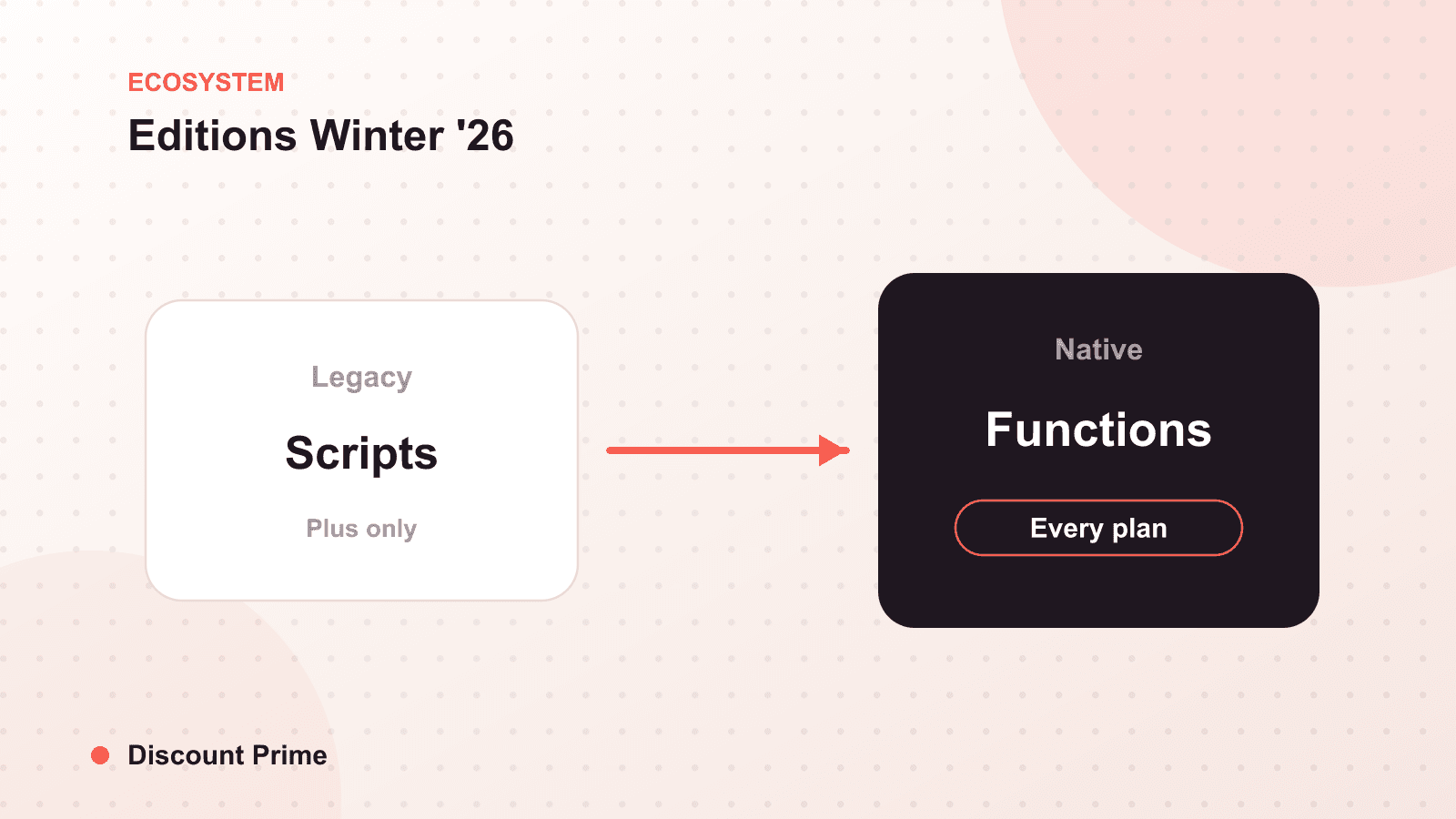
Functions is the settled home for custom logic. Every recent edition has deepened Shopify Functions, and Winter '26 keeps that going. The message has not wavered: if your discounts, checkout rules, or pricing logic depend on custom behavior, that behavior belongs in Functions, not in Scripts or theme patches. With Scripts formally being wound down this year, this is no longer a preference, it is the path. The stores that bet on Functions early are watching platform shifts happen to other apps, not to them.
Structured product data is becoming core. The platform keeps investing in metafields, metaobjects, and structured catalog data, and Winter '26 continues that investment. This is not a niche developer concern anymore. Structured data now drives storefront display, search, AI surfacing, and, as of last month in our own app, discount targeting. Clean, populated metafields are turning into table stakes for running precise promotions.
AI is reading your offer before a human does. Following the Horizon release, AI-assisted and agentic commerce keep advancing. The practical consequence for pricing is subtle but real: your offer is increasingly parsed by software that compares it against alternatives before a shopper ever sees a product page. That rewards clarity and consistency, per-unit pricing that makes sense, offers that are legible, margins that hold, and it quietly punishes the sloppy, stacked, hard-to-parse discount.
What to actually do about it
Editions can trigger feature FOMO. Resist it. The right response to a release is one or two concrete changes, not a scramble to touch everything.
Keep your discount logic Functions-native. If any part of your pricing still runs on Scripts or a theme hack, this is the year to move it. Functions works on every plan, applies natively in cart and checkout, and coexists with discount combinations. This is the foundation under our own volume discounts, and it is the safest place for custom logic to live going forward.
Populate your product data now. Define and fill the metafields that describe your catalog: season, product line, material, launch date, an internal margin band. Even a modest set unlocks better filtering today and precise, attribute-based promotions immediately, since metafield targeting is already live. Structured data is the input; everything downstream is only as good as it.
Make margin explicit, not implicit. As AI surfaces compare offers and as targeting gets more precise, the cost of a sloppy discount rises. Know your fully loaded cost per product and set a hard floor beneath your campaigns so no single order goes underwater. Our profit analytics and profit floor exist for exactly this: precise targeting is only an asset if it cannot become an unprofitable one.
A quick way to triage any Editions release
When the announcement drops, run each item through three questions and discard anything that fails all three.
| Question | If yes | If no |
|---|---|---|
| Does it change how I price or discount? | Read it closely | Skip it |
| Does it change how checkout behaves? | Check for migration work | Skip it |
| Does it change what data I need to maintain? | Plan a data task | Skip it |
Most of any edition will fail all three for your specific store, and that is fine. The two or three items that pass are where your attention belongs. This triage keeps you responding to the platform's direction instead of drowning in its feature count.
The through-line across editions
Step back across the last few releases and the story is coherent. Shopify is consolidating custom logic into Functions, making structured data a first-class citizen, and building toward a commerce layer that AI can read and act on. For a pricing and discount merchant, none of that is a threat. It is an invitation to be more precise: target promotions by what products are, protect margin with explicit floors, and keep your logic on the platform's supported path.
Winter '26 does not change that direction. It confirms it. And the stores that were already Functions-native, already populating metafields, and already watching margin will find that this edition mostly validates decisions they made months ago.
Setting this up with Discount Prime
If Winter '26 has you rethinking anything, make it the boring, durable stuff: get your discount logic onto Functions, populate the metafields that describe your catalog, and put a hard floor under every campaign. Discount Prime runs natively on Shopify Functions, targets by metafield, and enforces a profit floor, so the direction this edition points toward is already the direction the app is built for. You can find it on the Shopify App Store.