Twice a year Shopify ships hundreds of updates at once, and twice a year most merchants scroll the whole list looking for the three things that actually change how they run their store.
Shopify Editions Winter '25 is here, and if you sell with discounts and pricing rules, the useful exercise is not reading all of it. It is filtering the release down to what affects your margin, your checkout, and your customer segments, and ignoring the rest. This post is that filter, written from the point of view of a store that lives and dies on how well it discounts.
The direct read: nothing in an edition changes the core direction that has held for two years now. Custom discount and checkout logic keeps moving into Shopify Functions and checkout extensibility, and away from Scripts and liquid patches. If your discounts already live in Functions, an edition is mostly confirmation you bet right. If they do not, each edition is another nudge to migrate before you are forced to.
What Shopify Editions actually is
Shopify Editions is the platform's twice-yearly release showcase, published in winter and again in summer. Shopify collects hundreds of shipped and shipping-soon updates across the whole product and presents them in one place. It is part product announcement, part roadmap signal. The winter releases tend to be broad, touching admin, checkout, B2B, and the developer platform all at once.
For a discount-focused merchant, the trap is treating the whole thing as a to-do list. It is not. The vast majority of any edition is irrelevant to how you price and promote. The skill is pattern recognition: spotting the few items that touch pricing, checkout, or segmentation, and reading the overall direction of travel.
The direction that matters for discounts
Strip away the specifics and the platform has been telling discount merchants the same thing across several editions in a row.
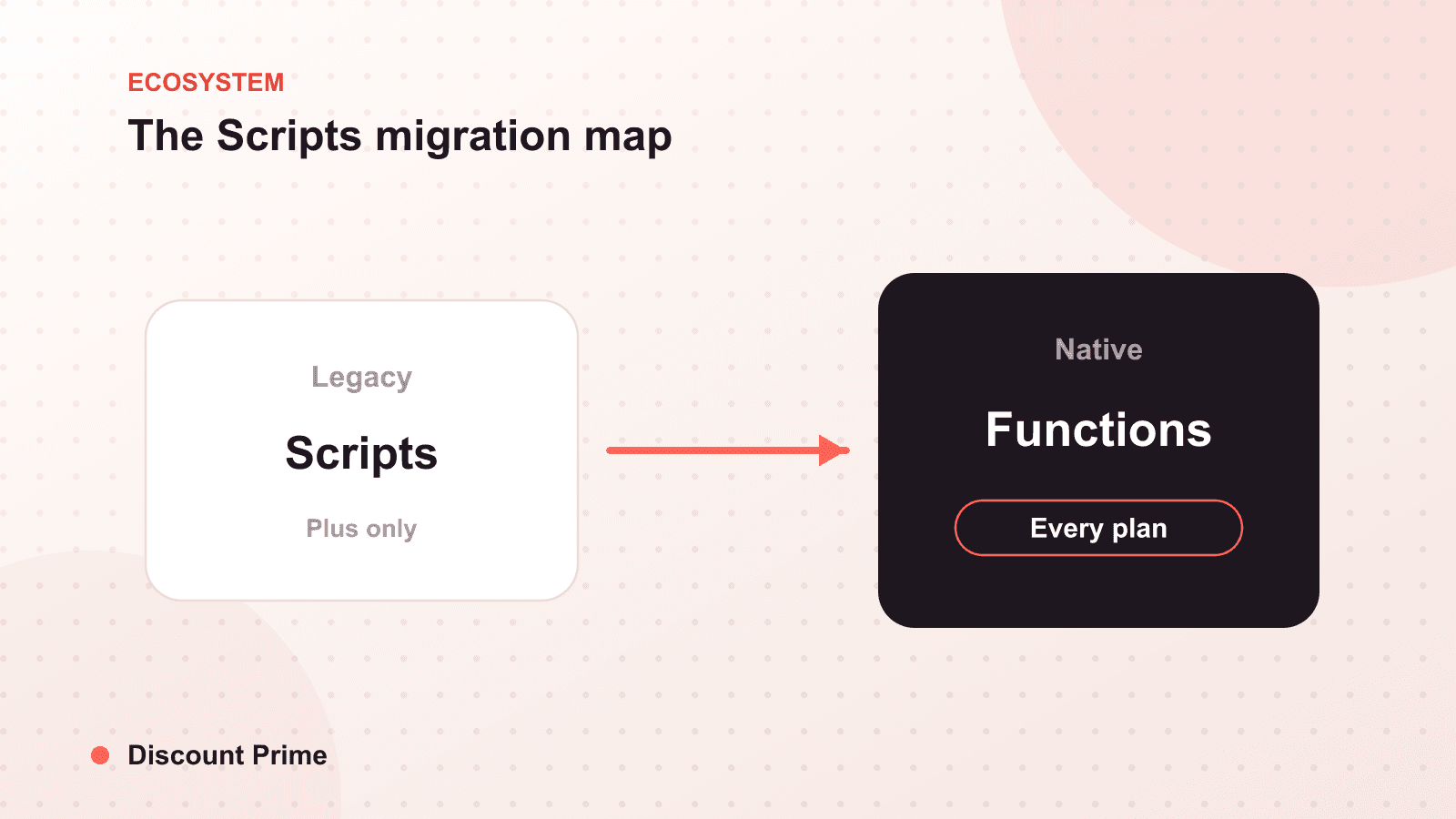
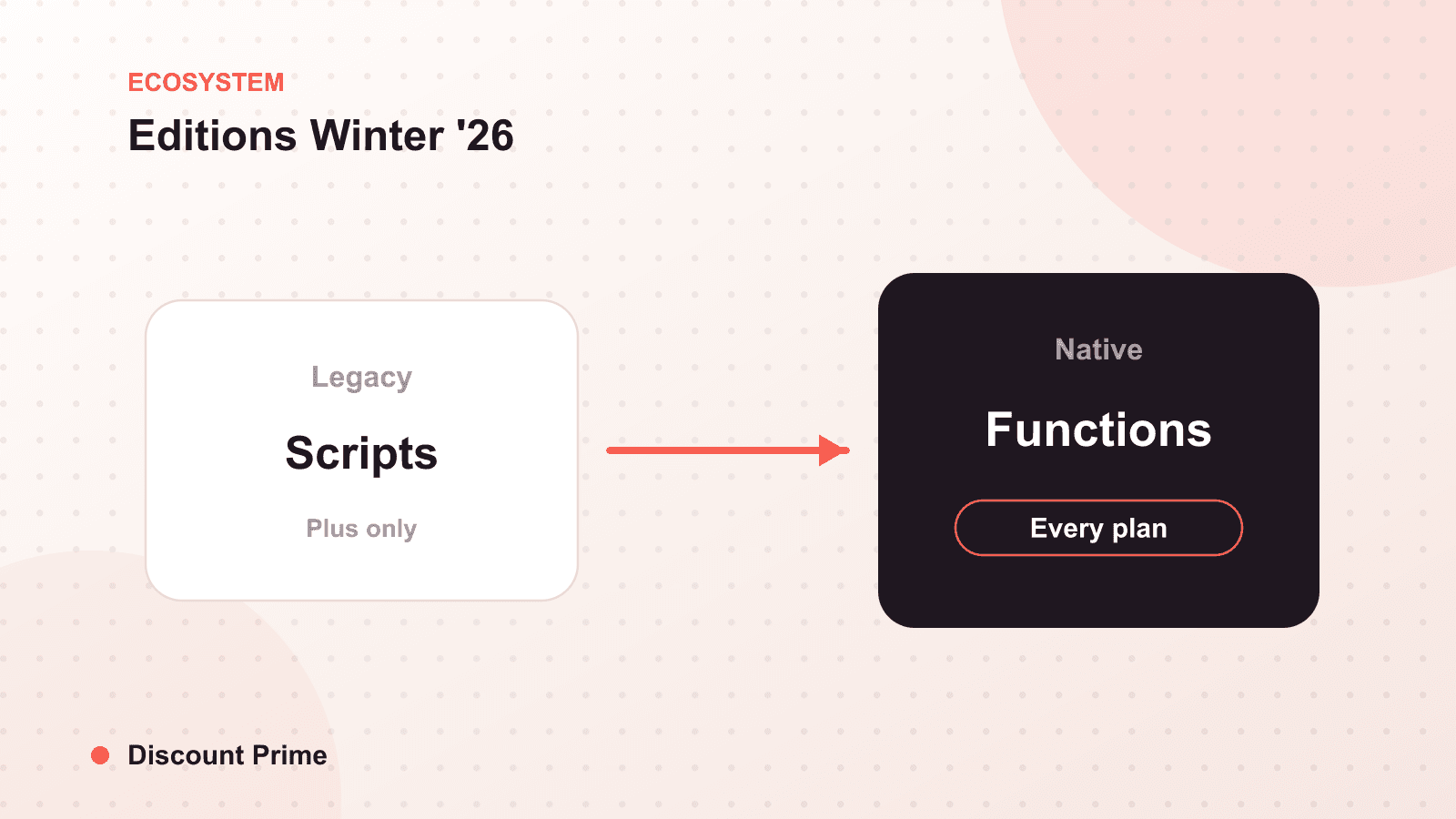
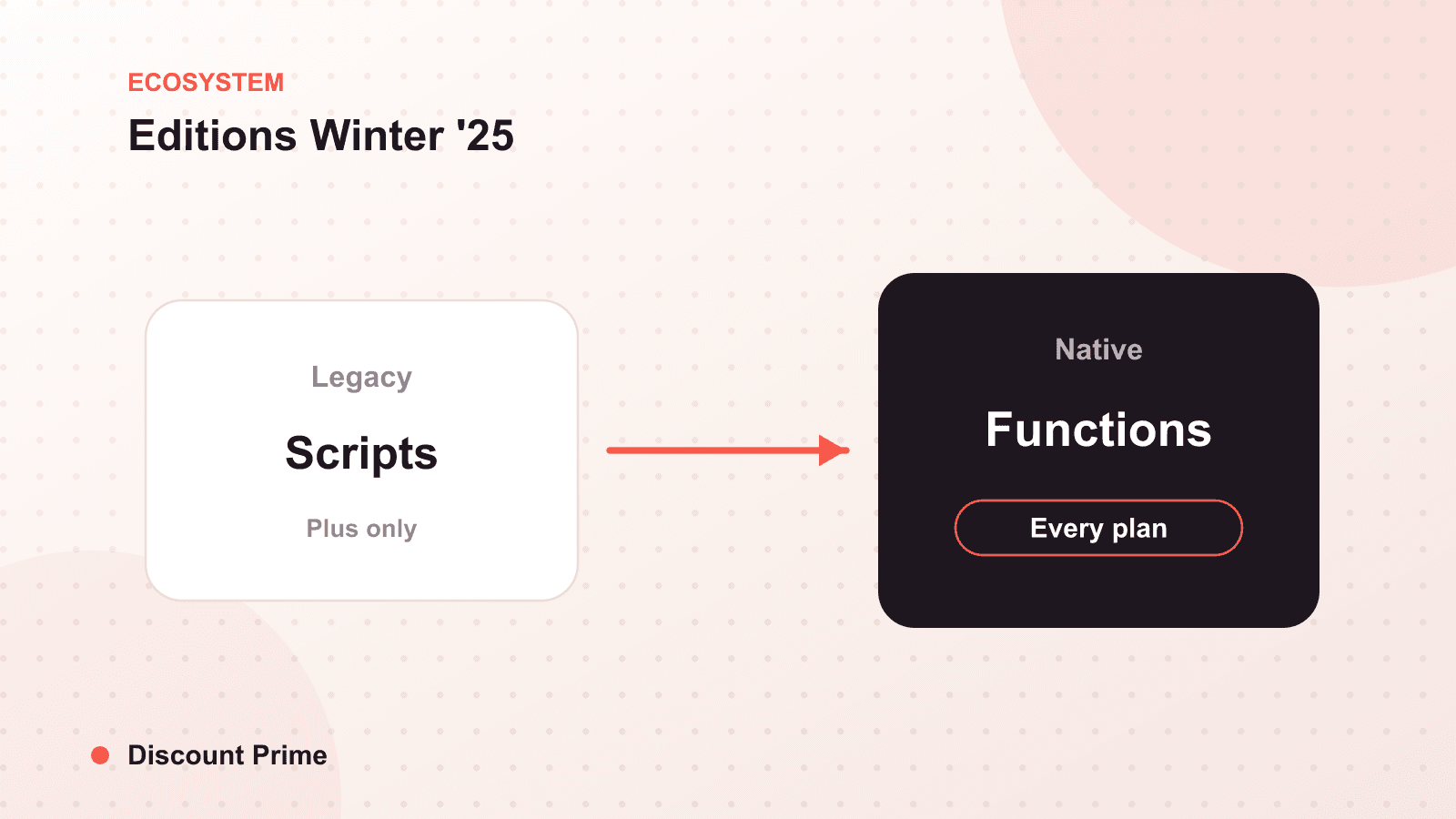
Native logic wins. The clearest, most consistent signal is that custom pricing and discount logic belongs inside Shopify Functions, running natively in the checkout, rather than bolted on through legacy Scripts or liquid edits. Functions work on every plan, not just Plus, and they are faster and more stable in checkout. Every edition reinforces this, and Winter '25 is no exception.
Checkout keeps closing. The multi-year push toward checkout extensibility, and away from the old checkout.liquid customizations, is a direction, not a one-time deadline. The information, shipping, and payment pages already moved off checkout.liquid last August. The platform's message is unambiguous: customizations, including discount-related ones, live in supported extension points now.
B2B keeps maturing. Editions have steadily built out native B2B capabilities. For merchants who sell to both consumers and trade accounts, the platform increasingly assumes you will price differently for different customer segments rather than running one price for everyone.
What to actually do about it
You do not need to react to most of an edition. You do need to do three small things.
1. Confirm your discount logic is native. If any of your pricing still relies on Shopify Scripts, that is legacy technology on borrowed time. Custom quantity tiers, volume breaks, and segment pricing should run on Functions today. If they do, you are aligned with where the platform is going. If they do not, migration is a when, not an if.
2. Treat combination control as a core skill. As more discount logic becomes native and stacking becomes easier, the risk shifts from "can I run this promotion" to "what happens when two promotions touch." The discount combinations controls are where you decide, deliberately, what stacks with what. That control is more important than any single new feature.
3. Measure margin, not headline depth. The platform is giving you more powerful ways to discount. The discipline that has to grow alongside that power is measuring what each promotion does to margin per order, not just how big the discount looks. Our analytics exist for exactly that reason.
A worked read of a release
Here is how the filter runs in practice. Suppose an edition announces fifty checkout updates, thirty admin improvements, and twenty developer platform changes. As a discount merchant you can ignore roughly ninety of those hundred items on the first pass. You are looking for anything that changes how discounts apply in checkout, anything that changes how you segment customers, and anything that moves a deadline for legacy technology you still depend on. On most editions that is three to five items. Read those closely; skim everything else. That is the entire job.
Where this leaves discounting
The through-line across recent editions, Winter '25 included, is that Shopify wants pricing and discount logic to be native, combinable, and measurable. That is genuinely good news for merchants, because it means the capabilities that used to require Shopify Plus and custom Scripts are now available to every store through Functions-based apps. The catch is that native and combinable also means it is easier than ever to stack yourself into a margin hole without noticing. Power and discipline have to grow together.
For the wider pattern of reading these releases, our earlier breakdowns of Shopify Editions Winter '24 and Shopify Editions Summer '24 show the same filtering approach applied to previous releases, and reading them together makes the direction of travel obvious.
Setting this up with Discount Prime
Discount Prime was built on the side of this trend that keeps winning: discount logic native to Shopify Functions, running in checkout on every plan, with explicit combination controls so stacking is a decision and not an accident. If an edition ever makes you wonder whether your discounts are on the right side of the platform's direction, volume discounts and our analytics are already there. You can find the app on the Shopify App Store.