Every Shopify store still running Scripts now has a date on the calendar, and June 30 does not negotiate.
On March 12, 2026, Shopify confirmed what the platform's direction had signaled for years: Scripts is being turned off. Script editing ends on April 15, 2026, and existing Scripts stop running on June 30, 2026. If any part of your checkout depends on a line item, shipping, or payment Script, you have a migration to complete before summer, and the honest version is that the earlier deadline is the one that bites, because after April 15 you can no longer touch the Scripts you still have.
This post is the map. What is shutting down, when, what replaces it, and a checklist to move each Script to Shopify Functions without breaking checkout on the way.
What is actually shutting down, and when
Scripts is the legacy system that let Shopify Plus merchants write Ruby that ran inside checkout to customize discounts, shipping options, and payment methods. It was powerful and it was Plus-only, which is exactly why Shopify has spent years replacing it with something that works for everyone.
Three dates matter:
| Date | What happens | What it means for you |
|---|---|---|
| March 12, 2026 | Shutdown announced | The clock starts. Begin your Script inventory now. |
| April 15, 2026 | Script editing ends | You can no longer create or edit Scripts. Whatever exists is frozen. |
| June 30, 2026 | Scripts stop running | Any behavior a Script enforced disappears from checkout. Hard cutoff. |
The trap is the gap between the two later dates. After April 15 your Scripts still run but you cannot change them, so if you find a bug or need a tweak during migration, your only path is to rebuild in Functions. Treat April 15 as your real deadline to have replacements built and tested, not June 30.
What replaces Shopify Scripts
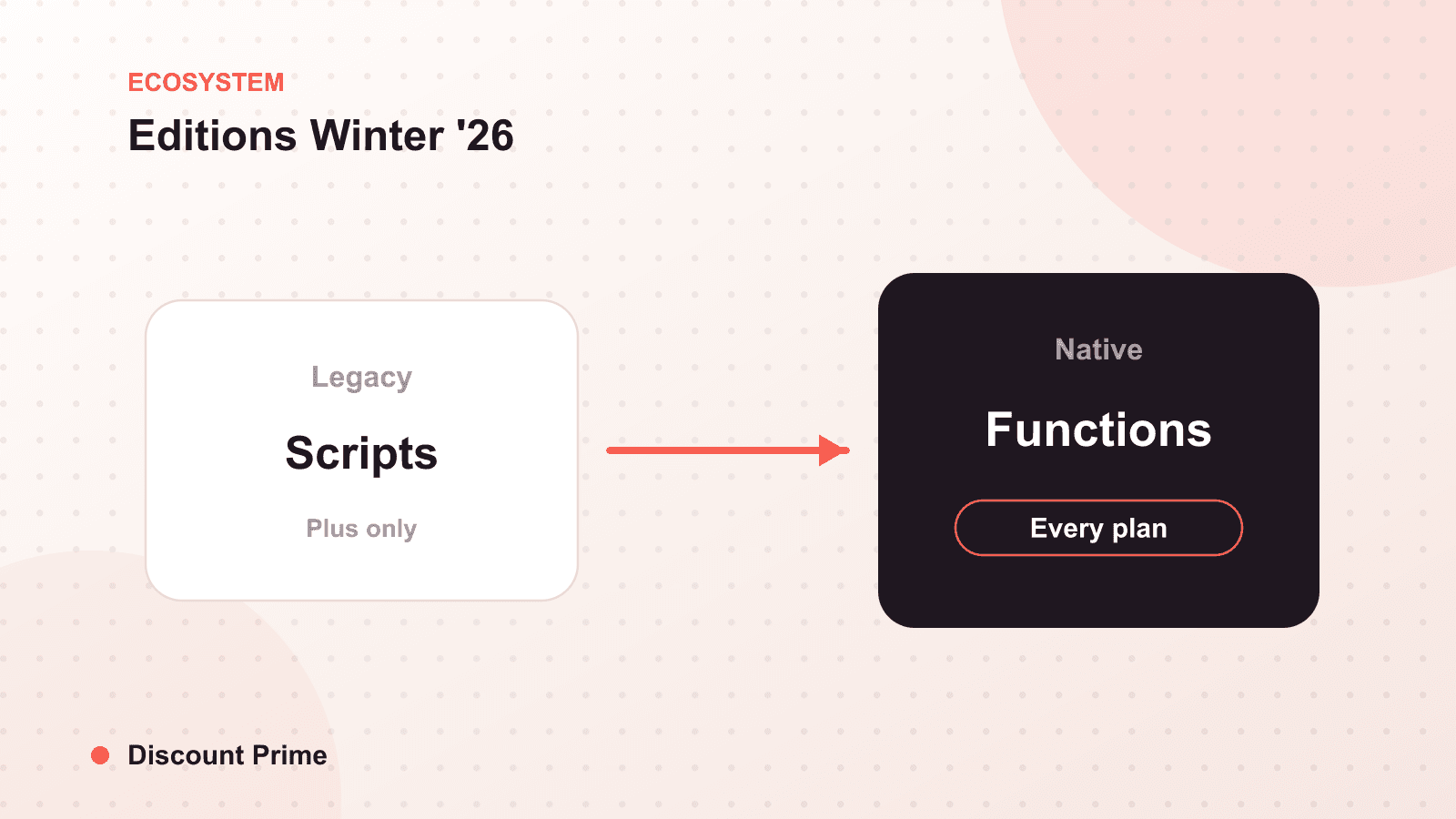
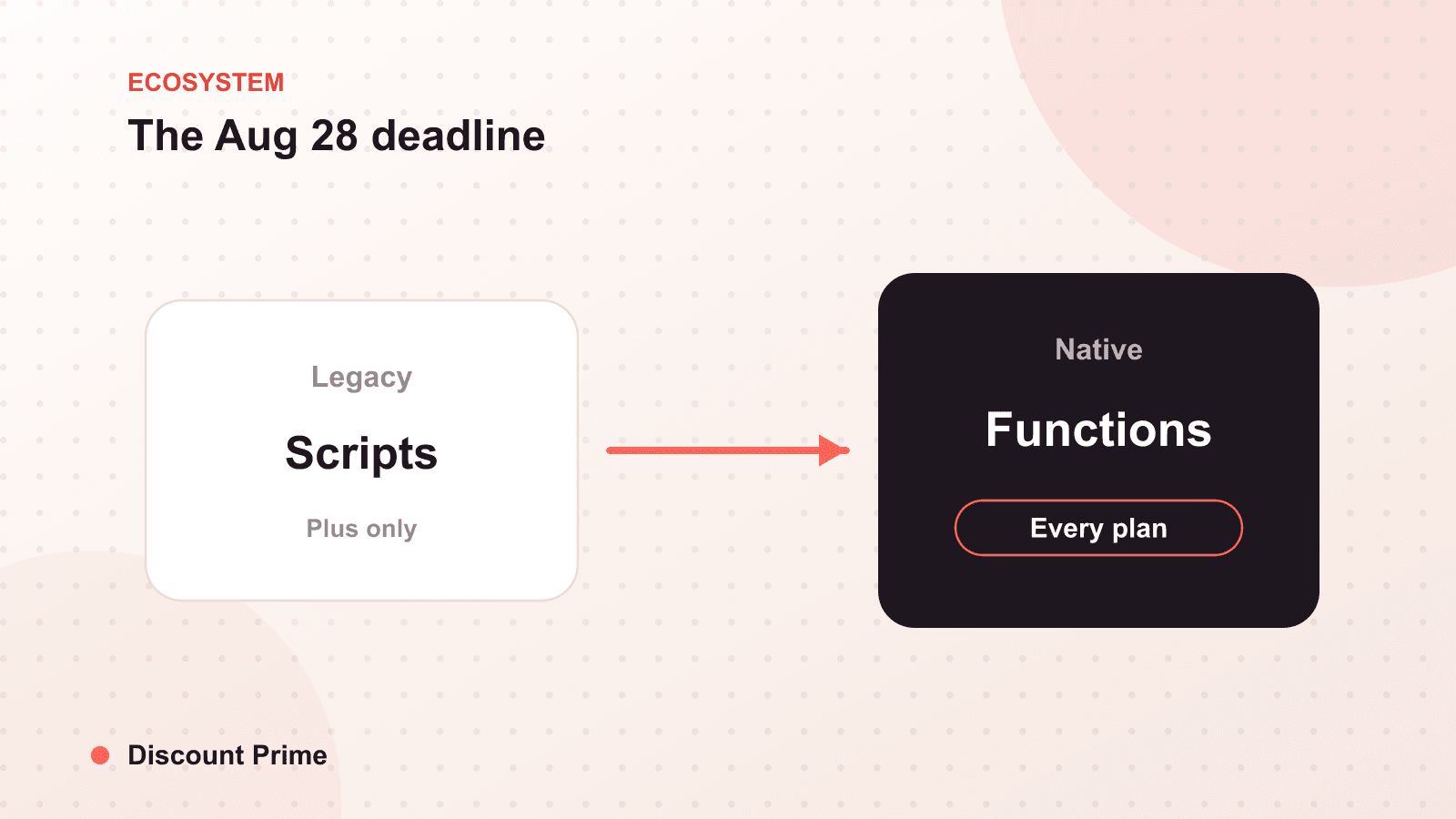
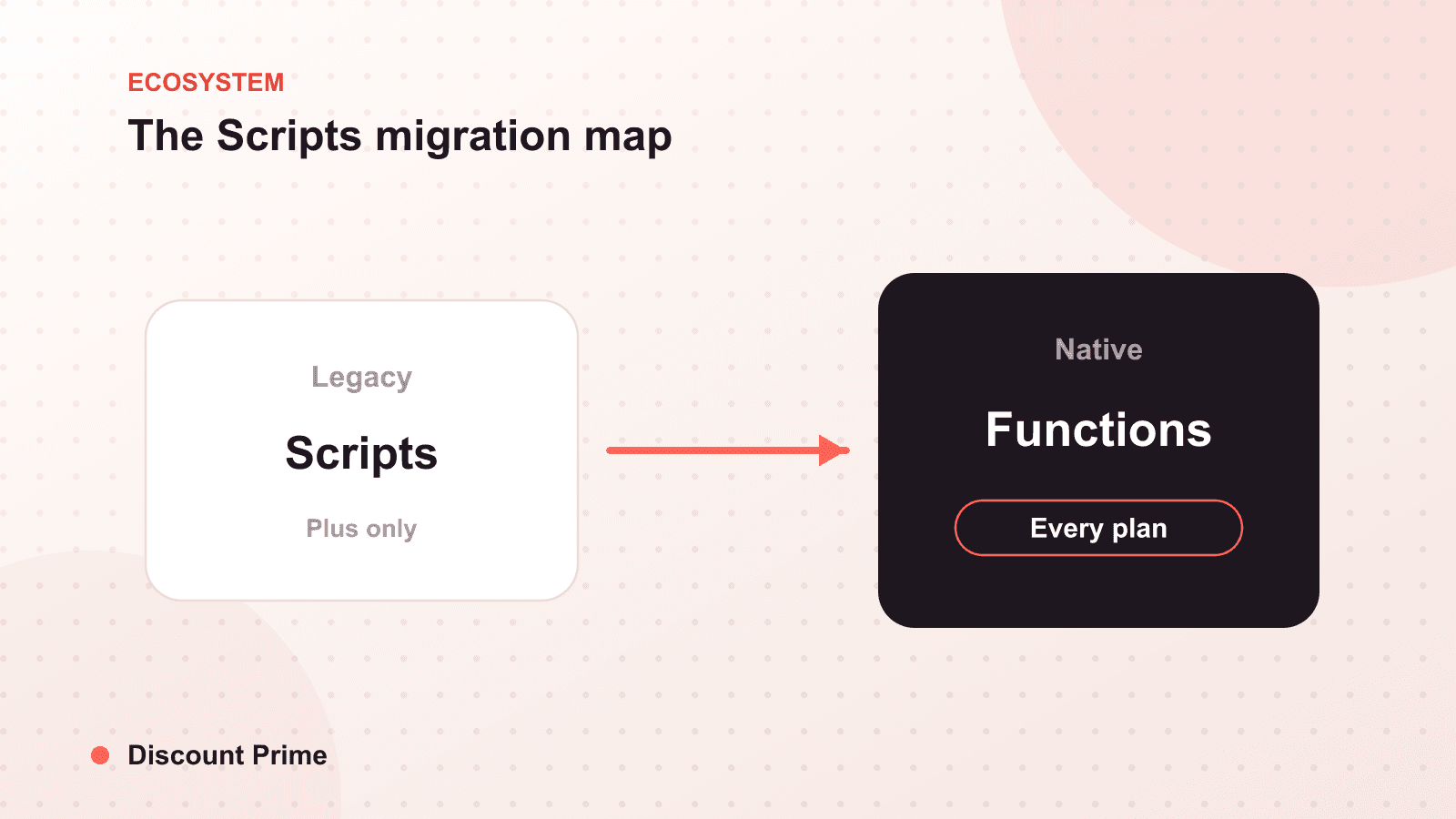
Shopify Functions is the successor, and it is not a like-for-like port. It is a better foundation. Functions run custom logic natively inside Shopify's discount, shipping, and payment engines, they work on every plan rather than Plus only, and they coexist with the discount combinations system Shopify shipped in 2023. This is the same shift the platform made when it deprecated checkout.liquid: custom behavior moves out of legacy runtimes and into native extension points.
Most merchants will not write Functions by hand. The practical path is an app that ships Functions-based logic you configure in an admin, the same way you would have configured a Script, but without the Ruby, the Plus requirement, or the maintenance. Discount Prime has run entirely on Functions since day one, which is why for discount Scripts the migration is mostly a matter of rebuilding the rule in a settings panel rather than in code.
The migration checklist
Work through this in order. The first two steps are the ones stores skip and regret.
- Inventory every active Script. Open the Script Editor and list every line item, shipping, and payment Script that is published. Note what each one does in plain language. Behavior that silently stops on June 30 is invisible until a customer hits it, so write it all down now while you can still read the code.
- Classify each Script by type. Line item Scripts handle product and cart discounts. Shipping Scripts hide, rename, or reprice delivery options. Payment Scripts hide or reorder payment methods. Each type maps to a different Functions surface, so grouping them tells you what you are actually migrating.
- Map each Script to a Functions equivalent. For most discount logic (percentage off, tiered pricing, quantity breaks, buy X get Y, customer-specific pricing), a Functions-based discount app covers it directly. For shipping and payment customization, use a Functions app built for those surfaces. Flag any bespoke Ruby that has no clean equivalent for extra planning time.
- Rebuild in a test environment first. Recreate each rule and confirm it produces the same cart total, the same shipping options, and the same payment methods as the Script did. Do not rebuild live during BFCM-adjacent traffic or on a store you cannot afford to break.
- Run both in parallel briefly, then cut over. Where possible, validate the Functions version against the Script on real carts before you retire the Script. Confirm discount combinations behave, because Functions respects the combinations settings and old Scripts predate them.
- Turn off the Script and document what you built. Once the Functions version is verified, disable the Script so the two cannot both fire. Record which Function now owns which behavior, so the next person who audits your checkout is not reverse-engineering it in June.
A worked example
Suppose a Plus store runs a line item Script: "spend over $200, take 10% off the cart; wholesale-tagged customers take 20%." That is two rules. In a Functions-based app you recreate it as a cart-value discount at 10% with a $200 threshold, plus a customer-tag rule at 20% for the wholesale segment, and you set the combination behavior so the two never stack into 30%. Total rebuild time is minutes, the logic now runs on every plan, and you have gained combination control the Script never had. The hard part was not the rebuild. It was knowing the Script existed, which is why the inventory comes first.
Why this is a good deadline, not just a chore
Scripts asked you to maintain Ruby that only Plus could run and that lived outside Shopify's native discount engine. Functions runs inside it, on every plan, alongside combinations and checkout extensibility. Stores that made this move early spent the platform's transition years watching migrations happen to other people. If you are migrating now, you are not just avoiding a June 30 outage. You are moving onto the surface Shopify is actually building on.
Landing on Functions with Discount Prime
If your Scripts are discount Scripts, Discount Prime is the Functions-native place they land. You rebuild volume discounts, tiered pricing, and customer-specific rules in an admin panel, keep full control over how discounts combine, and see margin impact in profit analytics once campaigns run, none of which required Plus or Ruby. If you are still comparing options, our roundup of the best Shopify discount apps lays out the Functions-based field. For the platform context behind this shift, see our earlier note on the August 28 checkout deadline, and for where the app itself began, how Discount Prime launched. You can install from the Shopify App Store and rebuild your first Script today.